No products in the cart.
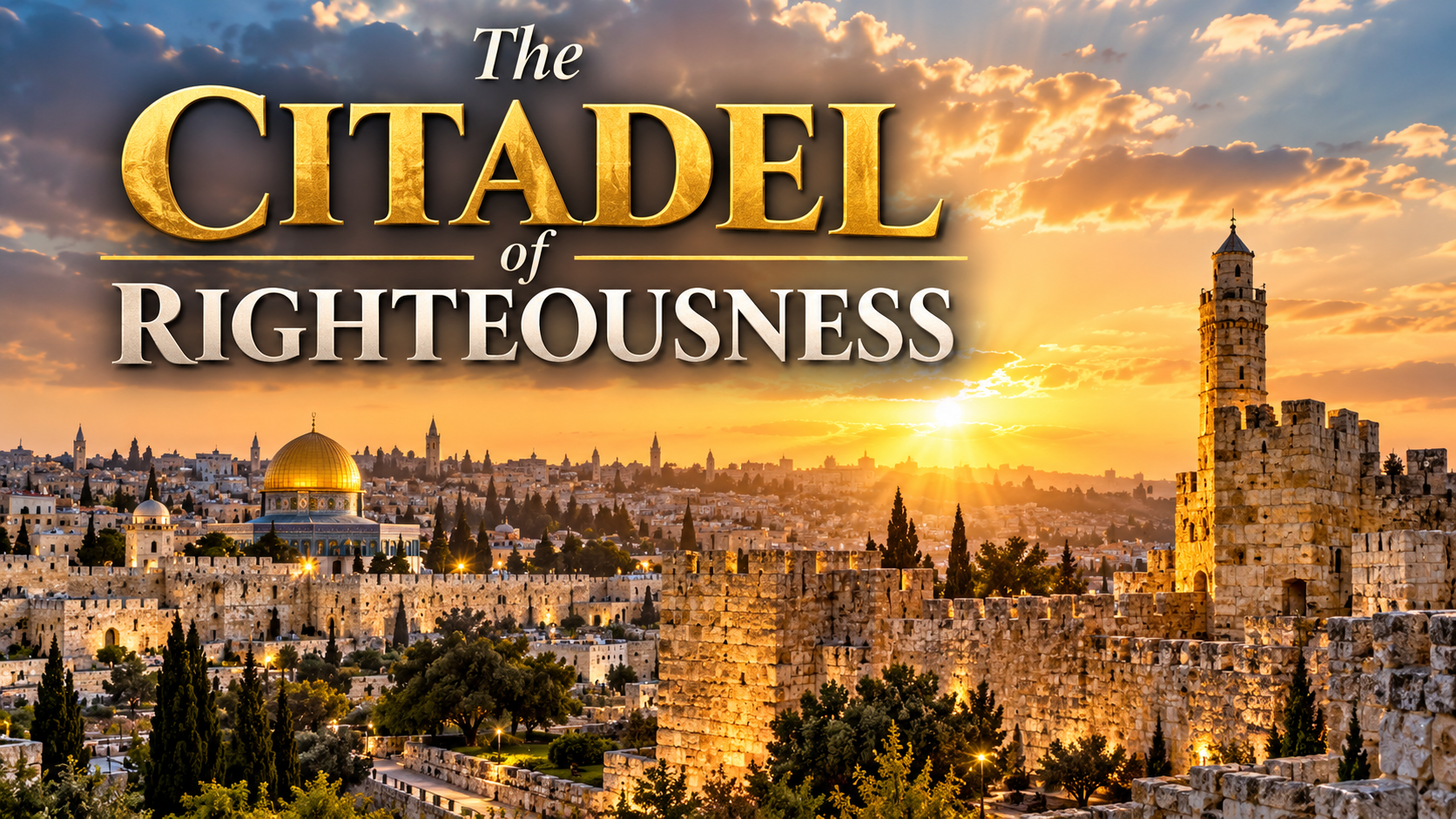
The Citadel of Righteousness
 Rabbi Reuven Schrier
As Avraham Avinu returns from his victorious rout of the four kings, he is warmly greeted by the king of Shalem, Malki-Tzedek, a priest of Hashem (Bereishit 14:18). This mysterious city Shalem seems to have been located in Eretz Canaan. Yet, it is never mentioned again in the narrative and appears to simply disappear.
Malki-Tzedek is equally mysterious. He appears in this episode, only to vanish from the remaining narratives of Sefer Bereishit.
Chazal, followed by many of the classical commentators, identify the city of Shalem as Yerushalayim. As the Ibn Ezra, Ramban, and Radak note (ad loc.), Shalem is explicitly identified with Yerushalayim in Tehillim 76, where the pasuk associates שלם with ציון. Additionally, Chazal teach that Malki-Tzedek was none other than Shem, the righteous son of Noach and ancestor of Avraham Avinu (see Rashi ad loc.).
What initially appears shrouded in mystery is thus revealed through the words of Tehillim and the traditions of Chazal. But this raises a deeper question: why does the Torah associate Yerushalayim with these particular names? What do Shalem and Malki-Tzedek reveal about the spiritual identity of the city?
Drawing on the teachings of Chazal, the Radak explains that the name Malki-Tzedek alludes to a fundamental spiritual reality: the ruler of Yerushalayim must embody justice and righteousness. Malki-Tzedek literally translates as “my king is just;” the city itself metaphorically proclaims that her king must be upright and righteous. Similarly, the city is called Shalem because its spiritual essence is bound up with Shalom – peace.
The Radak continues with powerful – and haunting – words: כי ירושלים הוא מקום הצדק והשלום לא יסבול עול וחמס ומעשה תועבה זמן ארוך – for Yerushalayim is a place of righteousness and peace, and it does not bear sin, theft, and abominable acts for long.
The implications are sobering. Just as Eretz Yisrael vomits out those who violate the Torah that expresses the land’s spiritual essence, those who undermine the values of tzedek and shalom cannot expect to remain in Yerushalayim indefinitely. The city is not a prize; it is a sacred gift whose spiritual fabric places demands upon those who dwell within it.
With our miraculous return to Eretz Yisrael and Yerushalayim, it is tempting to see an inevitable march toward complete redemption. We proudly recall the astounding events of 1948 and 1967, and look toward the future with confidence, assured that Yerushalayim will continue its triumphant march toward its ultimate destiny.
But reclaiming Yerushalayim is not the same as earning the right to remain there. The city’s spiritual essence cannot be reconciled with a society corroded by bitter conflict, vicious infighting, and petty rivalries. Yerushalayim demands justice. It demands moral integrity. And it demands the peace proclaimed by its name.
Yes, we have been showered with infinite Divine compassion. But we dare not grow complacent and Rachamana litzlan find ourselves engaging in the very behaviors that violate the essence of the city that was mercifully restored to us.