
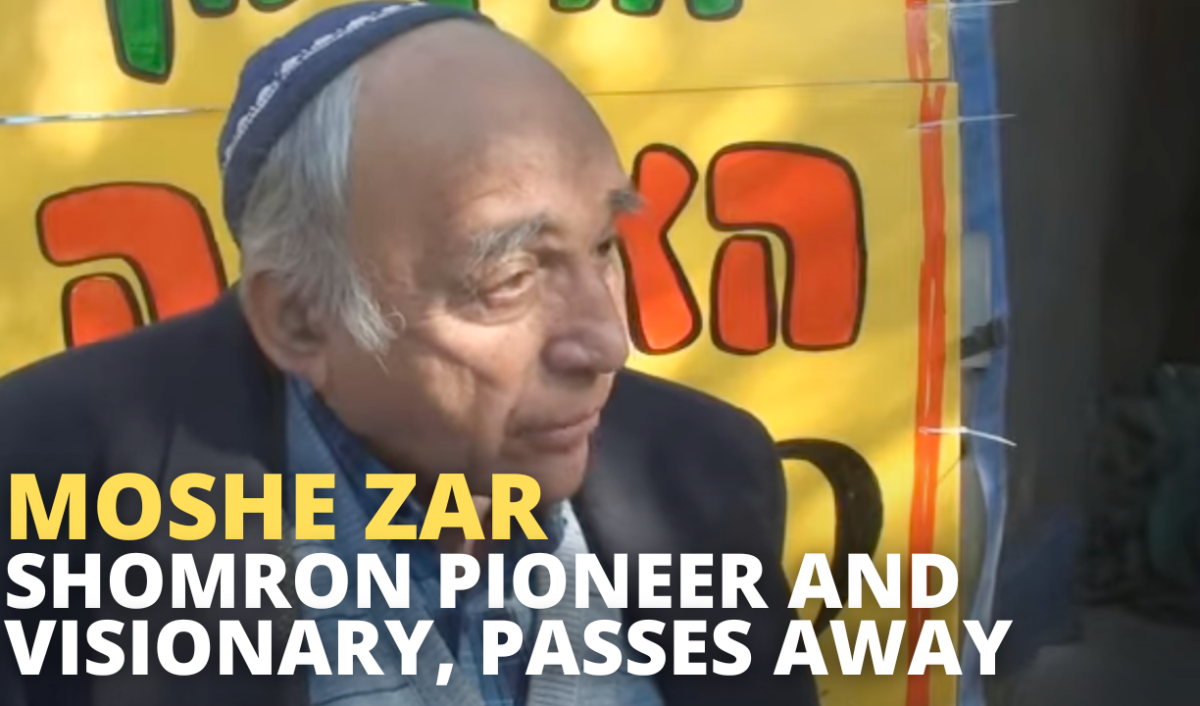
Moshe Zar, Shomron Pioneer and Visionary, Passes Away
By: Judith Segaloff Moshe Zar, a revered figure known as the “Grand Founder of the Shomron” and a tireless pioneer of Judea and Samaria, passed away peacefully. His legacy is etched into the landscape of the Shomron, where his decades-long dedication shaped communities like Ramat Gilad, named in memory of his murdered eldest son, Gilad. […]
Explore more
The Scent of Surrender: Bilaam vs. Avraham on Har HaMoriah
Throughout the entire narrative of Parshat Balak, there is an undertone of competition between Bilaam and the holy Avot. As Bilaam attempts to curse Klal Yisrael, he builds seven altars and offers numerous korbanot upon them. Chazal see great significance in his choice of the number seven. As Rashi explains (Bamidbar 23:6), the Torah records […]
Explore more
Hashem Tzilcha: When God Mirrors Our Indifference
In the aftermath of the dreadful sin of the meraglim, HaKadosh Baruch Hu informs Moshe Rabbeinu that He will wipe out the entire nation. As the ultimate defender of Klal Yisrael, Moshe passionately beseeches Hashem to spare them. He argues that destroying the people will create a desecration of Hashem’s name. The nations of the […]
Explore more
Pipelines of Light: The Menorah, the Mikdash, and the Soul of the World
As Jerusalem was being rebuilt following the bitter seventy-year Babylonian exile, Zechariah HaNavi experiences a series of exceedingly cryptic visions. As we will read in this week’s haftorah (Zechariah 3-4), an angel of Hashem first shows the navi a vision of Yehoshua Kohen Gadol and his purification (we discussed this prophecy prior to Yom HaShoah […]
Explore more
Transcendence and Unity: The Paradox of the Kohen Gadol
The Yom Kippur sacrificial service, as delineated in our parsha, highlights the Kohen Gadol’s unique and spiritually transcendent status. On this holy day, the Kohen Gadol alone fulfills the extensive duties of korbanot in the Mikdash. He even enters into the Kodesh HaKadoshim, the Holy of Holies, to intercede on behalf of Klal Yisrael. Only […]
Explore more
The Purity Beyond Possession
When introducing the concept of נגעי בתים, the tzara’at affliction that appears on the walls of a house, the Torah puts much emphasis on Eretz Yisrael and its ancestral portions. “When you come to the land of Canaan, which I am giving you as a possession, and I place a lesion of tzara’at upon a […]
Explore more
Rebuilding Jerusalem Is Our Answer To The Holocaust
For nearly two thousand years the Jewish people dreamed of returning to Jerusalem. Behind every prayer and blessing Jerusalem has stood silent, a magnet pulling our hearts towards it. When the extermination of the Jews of Europe hit a fever pitch, the Jewish people’s dreams never died. It was the rag tag army of Israel, […]
Explore more
Counting Toward the Chuppah Without a Home: The Pain and Promise of Sefirat Ha’Omer
We are now in the midst of Sefirat Ha’Omer, a period that serves as a spiritual bridge between Pesach and Shavuot. As the Ramban (Vayikra 23:36) famously suggests, these days resemble a Chol HaMoed-style extension of Pesach. Essentially, Pesach and Shavuot form one long holiday with many days of Sefirat-Chol HaMoed in between. These are […]
Explore more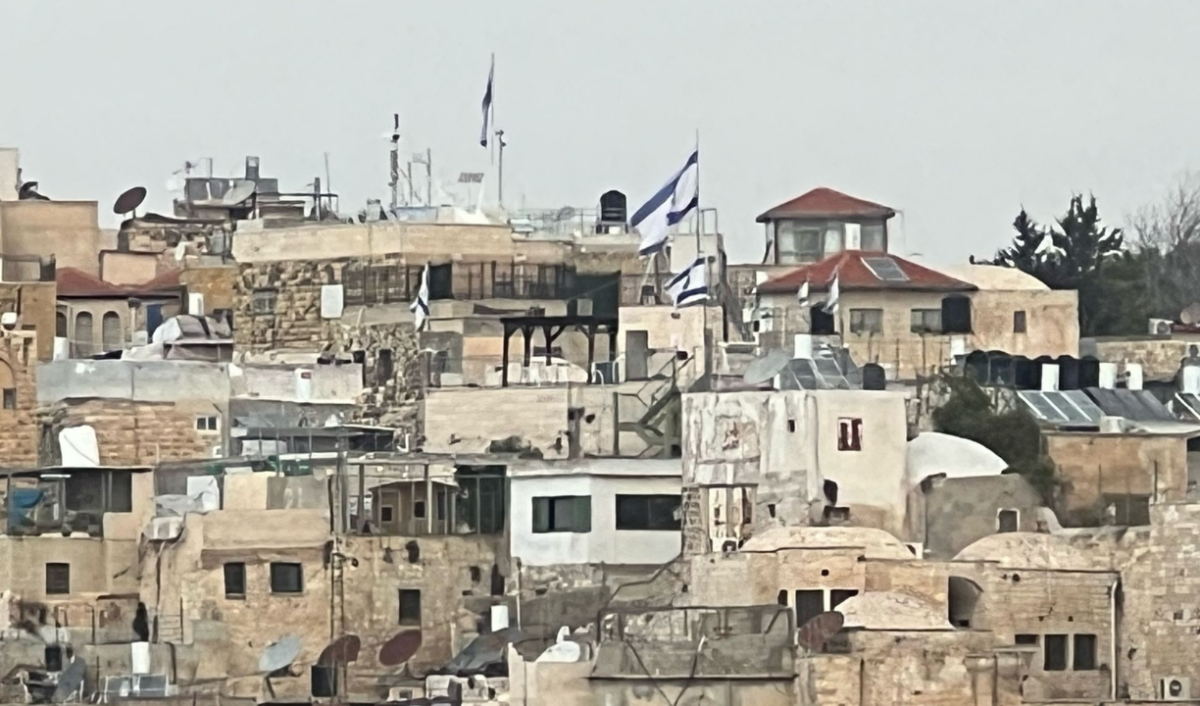
From the Rooftops of Jerusalem
In the times of the Beit HaMikdash, two different forms of sanctified korbanot were offered on the mizbeach. Kodshei Kodashim, more sanctified korbanot such as Korban Chatat, could only be consumed by the kohanim within the azara (courtyard of the mizbeach) itself. (Pay close attention to this week’s parsha and you’ll notice several such examples […]
Explore more
Slaying the Lion on a Winter’s Day
As we begin reading the extensive discussions of the sacrificial order in Sefer Vayikra, the collective, inaudible groan from the synagogue pews rings in my ears. Vayikra’s detailed descriptions of korbanot and the kohanim seem to bore many a modern Jew. Rav Soloveitchik tz’l beautifully bemoaned the Book of Vayikra’s “lack of mazel.” Throughout history, […]
Explore more