Beit Wittenberg: A Merchant Legacy Reclaimed After a Century of Forced Absence
-
by
ateretcohanim
- No Comments on Beit Wittenberg: A Merchant Legacy Reclaimed After a Century of Forced Absence
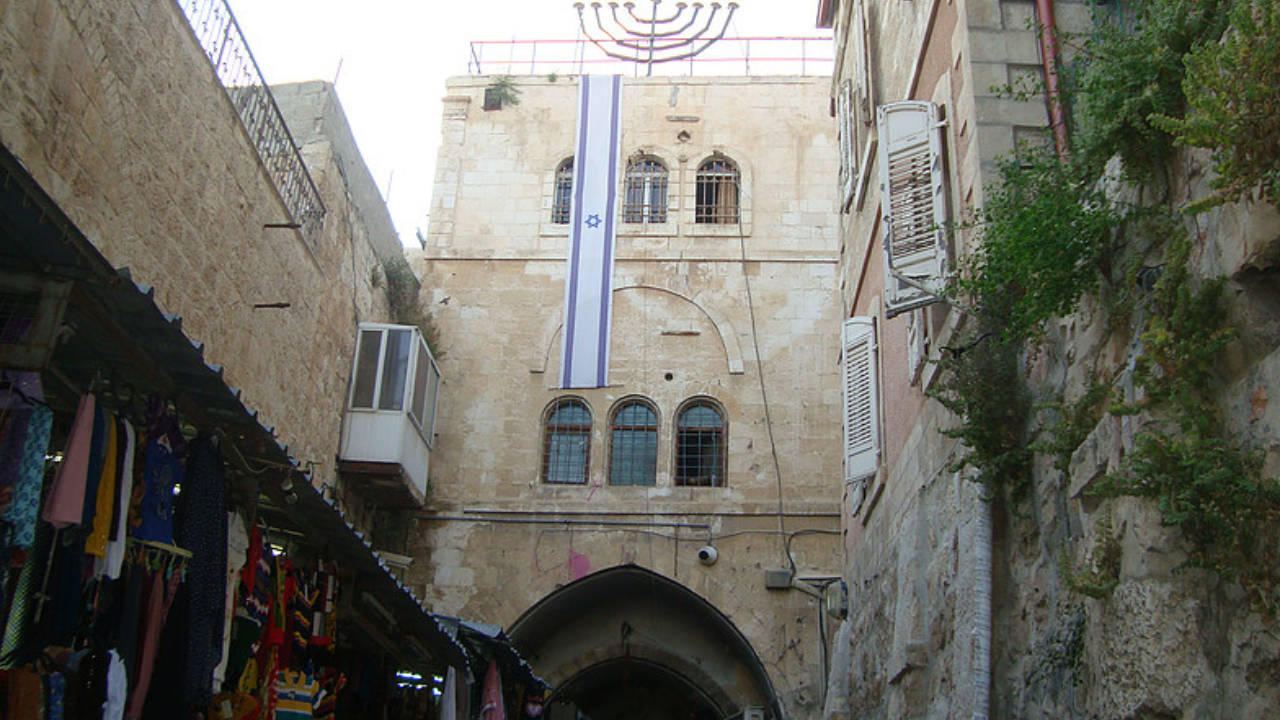
Beit Wittenberg isn’t just another stone structure in Jerusalem’s Old City. It’s a reminder — and now a restoration — of a Jewish commercial world that once thrived in places activists and diplomats now insist were “never” Jewish. The British Mandate files, family registries, and dusty notarized documents scattered across archives all point to the same fact: this building belonged to a well-established Jewish merchant family operating openly and successfully in Jerusalem in the late 19th century.
Strategically positioned along what was then the bustling north–south artery of the Muslim Quarter, Beit Wittenberg served a dual purpose: home and hub. It was a residence, yes, but also a warehouse anchoring the family’s commercial reach. The 1922 and 1931 British censuses — inconvenient to modern revisionists — record Jews living throughout this area, a reminder that the “four quarters” narrative is far cleaner on a tourist map than in historical reality. This was a mixed neighborhood, porous, lived-in, and integrated.
Then came the 1936–39 Arab riots — a campaign of intimidation and ethnic cleansing that pushed many Jewish families out of properties they had held for generations. The Wittenbergs were no exception. Forced out, their building was seized, repurposed, and effectively erased from the story told by those who prefer a simplified Old City divided neatly into ethnic boxes.
When Ateret Cohanim’s restoration of Beit Wittenberg started in the 1980s, it started with proof. Reassembling the chain of ownership, recovering original documents, and piecing together the legal narrative that had been violently interrupted. Only then came the physical work: stabilizing arches, restoring collapsed interior rooms, and giving the structure back its architectural dignity.
And now, nearly a century after violence severed the family’s connection to their own property, Jewish families live in Beit Wittenberg once again. It is more than a renovation; it is a correction — one building reclaimed, one historical lie overturned, one link in Jerusalem’s Jewish chain reforged.