Seesaw of Nations: Yerushalayim Drains the Power of Evil
 Rabbi Reuven Schrier
Our ancient family tree has two significant offshoots: Yishma’el and Eisav. Both were sons of the avos and both were rejected as the principal heir in favor of their younger brothers. Both were promised powerful descendants who would rise to great worldly influence.
Yet, one key distinction separates between these two estranged sons.
Yishma’el’s physical success and spiritual force are not inherently antithetical to the destiny of Klal Yisrael. His conflict with Yitzchak hinged on one question alone: Who would be the true successor of Avraham Avinu. Sarah Immeinu demanded that Yishma’el be removed from Avraham’s household when she saw him “מצחק – mocking”. According to many commentators (see Radak and Ha’amek Davar to Bereishis 21:9), Yishma’el’s chief offense was his ongoing slander of Yitzchak’s lineage, claiming that Avimelech, not Avraham, was his true father. Yishma’el wanted to be Avraham’s primary son; Yitzchak could exist, so long as he stayed second tier. And if Yitzchak dare tries to assert himself and claim his rightful place as Avraham’s heir, Yishma’el is quick to “shoot arrows” at him, violently resisting any challenge to the mantel he falsely claimed (see Rashi ibid).
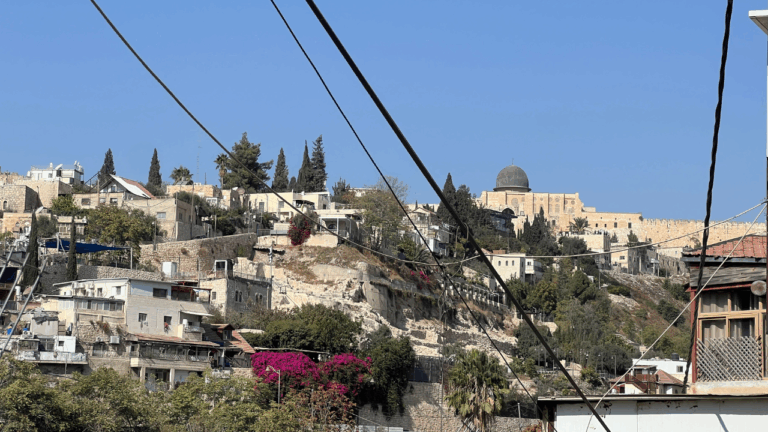
Yishma’el’s hatred stems from Hashem’s unequivocal declaration of Jewish chosenness: כי ביצחק יקרא לך זרע – for through Yitzchak will your seed be established. The progeny of Yishma’el cannot concede Yerushalayim to us without also acknowledging that the ultimate test of Avraham Avinu was the Akeidah of Yitzchak, not Yishma’el. Once the beloved child bound to the altar on the Temple Mount was Yitzchak, the chosen status of Klal Yisrael as the spiritual successors of Avraham Avinu becomes fully sealed.
Theoretically, though, Yishma’el can accept Yitzchak’s primary role and be redeemed. Indeed, Chazal tell us that he repented at the end of Avraham’s life, acknowledging Yitzchak as the primary child and allowing him to enter the Maharat HaMachpeila first when burying their father (see Rashi to Bereishis 25:9). Many suggest that the principle of ma’aseh avot siman labanim – the actions of the forefathers impact upon the destiny of their children – is also true of Yishma’el and his descendants. In the end of days, the children of Yishma’el will ultimately step aside and acknowledge Yitzchak’s chosen status.
Not so Eisav. Again and again, our parshah emphasizes that Yaakov and Eisav cannot coexist in harmony or parallel success. Chazal emphatically declare that Jewish destiny cannot reach its fruition while Eisav remains ascendant. Eisav is synonymous with inherent evil; his heavenly patron is none other than the Satan himself.
The Gemara Megillah (6a) asserts that the city of Yerushalayim and the city of Keisari (representing Eisav) exist in a metaphysical seesaw. When one rises, the other falls. As Rivka Immeinu was told by Hashem, ולאם מלאם יאמץ – one kingdom will overpower the other (Bereishis 25:23). The Gemara cites Yechezkel’s depiction of Rome declaring triumphantly that it will be filled by Jerusalem’s destruction (Yechezkel 26:2).
Why is Yerushalayim’s downfall so tightly bound with the rise of Eisav?
Rav Chaim Volozhiner (Nefesh HaChaim 1:12) explains that Yerushalayim is the principal conduit through which spiritual sustenance enters the world. It is the sha’ar hashamayim, the heavenly gateway through which our world is sustained. When spiritual shefa is being channeled through the proper passageways of sanctified Yerushalayim, none of the raw spiritual sustenance pouring into this world can be siphoned into the impure vessels of Eisav. When Klal Yisrael are properly serving the Ribbono Shel Olam in His chosen city, there is no oxygen, no metaphysical fuel, for Eisav’s evil to grow.
But when the Beit HaMikdash is destroyed and Yerushalayim lies in ruin, the spiritual pipelines begin to “leak.” The misdirected shefa reaches a dark, unholy destination – the irredeemable realm of Eisav.
Given this essential metaphysical equation, the renewal of Yerushalayim is not merely a national longing; it is the engine that drains the lifeblood of evil from the world. As Rav Chaim notes, evil has no inherent staying power. It can only exist by constantly leaching away from the rightful spiritual powers of Yerushalayim. The more Yerushalayim is rebuilt, sanctified, and aligned with the Divine will, the less strength remains for the forces of Eisav. May we speedily merit witnessing the day that evil evaporates like smoke in the wind, with the full restoration of Yerushalayim.