No products in the cart.
The Pauper with Flour Rivals the Bull
 Rabbi Reuven Schrier
As Sefer Vayikra begins, the Mikdash becomes the dominant center of almost every mitzvah introduced by the Torah. Our parshah begins by introducing the various types of animals that can be brought as a korban olah. A Jew could bring a bull, goat, or sheep entirely on to the mizbeach as a fire offering to Hashem. While there is a plethora of animals to choose from, the basic process of olah offering remains the same: the animal is slaughtered, the blood is caught in a kli shareit by a kohen, the blood is walked over to the mizbeach, and the blood is applied to the corners of the mizbeach. (A bird offering differs in terms of slaughter and application but still maintains the basic structure of avodah.)
But after describing the animal offerings, the Torah begins the parsha of Menachot: the flour offering. The flour offering is quite simple. It contains flour and oil, with some spices. The Torah describes the process: the flour was mixed with oil and the levonah spice was placed on top. The kohen takes away a small portion of the flour with three fingers and burns it on the mizbeach. The rest of the korban is consumed by the kohanim.
Simple enough. But then the Torah describes another form of flour offering. The materials are the same, but the method changes. This time, the korban – known as ma’aphe tanur – is baked in advance, then crumbled down. The kohen takes the altar-portion from the crumbled loaves. It seems quite strange for the Torah to offer another method of hakrava when the materials remain exactly the same. In fact, the Torah says that the mincha can be baked into loaves or wafers, two different baked products before it is broken down.
And it doesn’t end there. The Torah goes on to introduce another two forms of menachot, in which the flour is shallow fried, or deep fried in oil. Why so much variety for such a simple form of korban?
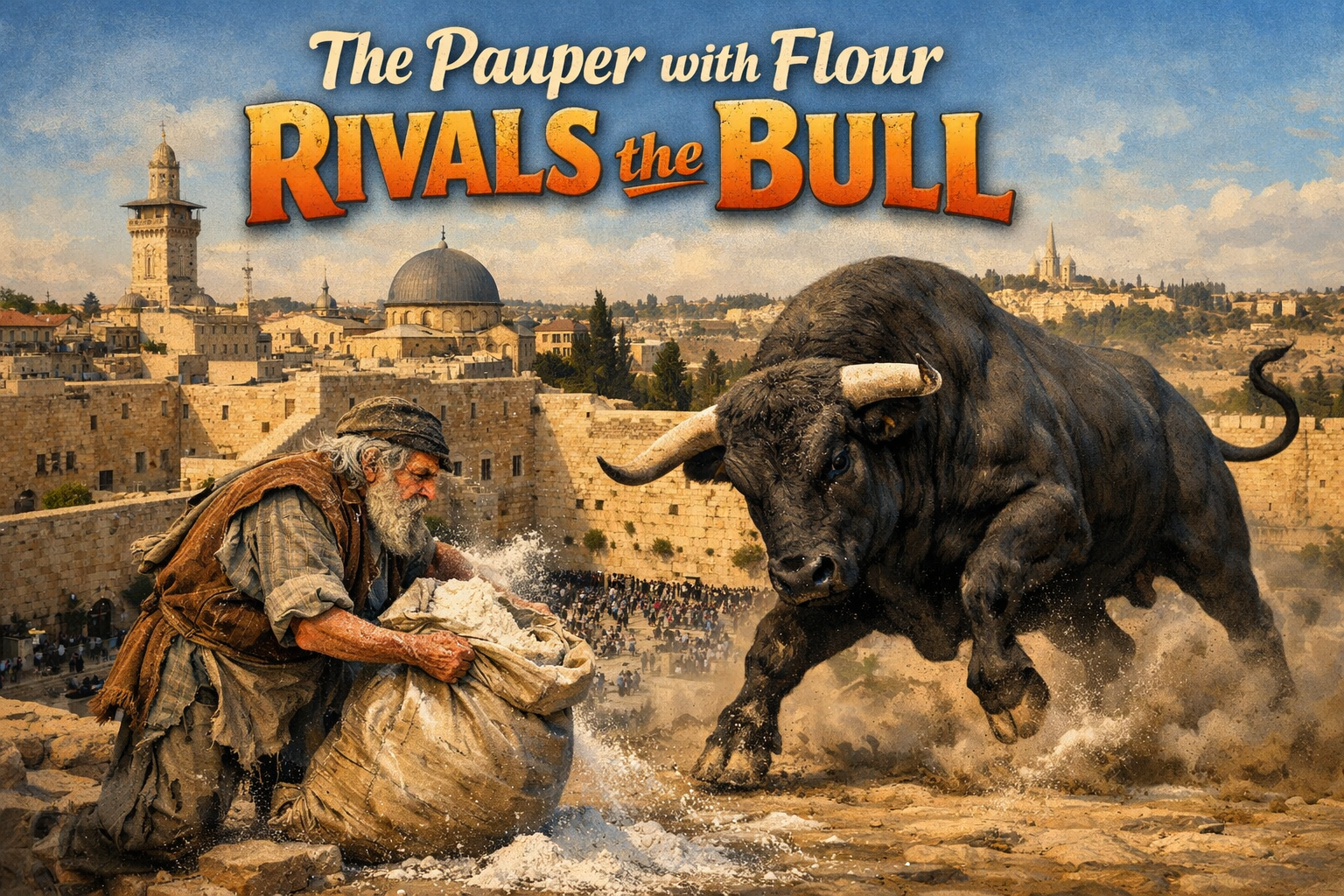
Rebbe Yitzchak (Menachot 104b) beautifully explains that Hashem sends a very powerful message to those who cannot afford the more expensive korbanot that open Sefer Vayikra. A pauper, unable to afford an animal sacrifice, is forced to bring a meager flour offering. But Hashem is worried that he will feel dejected, inadequate. Seeing the fattened bulls and beautiful flocks being brought as korbanot, he will view his simple flour offering as overly plain and pathetic.
Hashem counteracts the pauper’s dejection with a brilliant gesture. He creates variety where there seems to be simplicity. More so than any other korban, the minchah has so many forms of hakrava that there is an entire masechta devoted to it (as those who learn Daf Yomi are well aware). The pauper can now choose what to do with his flour offering. And he sees that Hashem is interested in him. Why else would Hashem place so much emphasis and create so many forms menachot?
The lesson learned by this pauper – that even the smallest and most simple of Jews is desired by Hashem – is what Yerushalayim reveals. Outside of the Mikdash and far away from Yerushalayim, mortal hierarchies reign
supreme. One of the most powerful factors in establishing these hierarchies was, and remains, wealth. These socio-economic distinctions leave a pauper feeling subclass and inadequate.
But upon entering Hashem’s home in Yerushalayim, pathetic and vain pecking orders melt away. In front of the King of Kings, all mortal accomplishment amounts to nothing. All HaKadosh Baruch Hu cares about is the relationship that is created with every Jew, no matter how small, when he puts his best foot forward.
In Yerushalayim, a Jew discovers a truth the world works hard to obscure: the same God Who commands the offering of mighty bulls lingers over a handful of flour, savoring it with the same Divine pleasure. And in this moment, the pauper stands as an equal among his brothers. He finally realizes that in Hashem’s world, no Jew is small.