A Sanctuary in Transit
 Rabbi Reuven Schrier
The construction of the Mishkan was a glorious undertaking. Klal Yisrael successfully built a structure that served as the “resting” place of the Shechinah, a place where Hashem’s Presence was revealed within the physical world. Its construction required incredible expertise and penetrating spiritual wisdom.
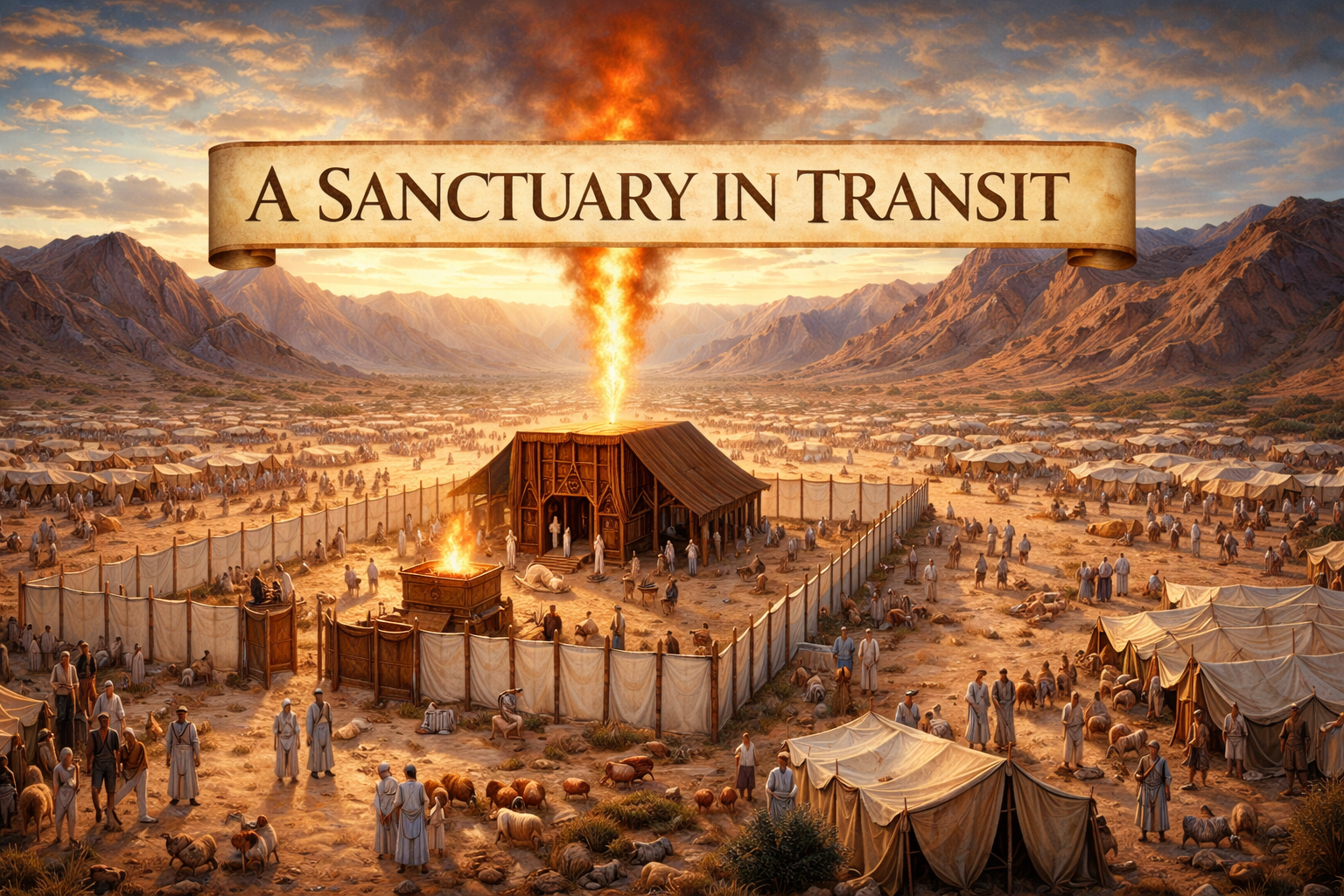
And yet, upon close inspection, the Mishkan pales in comparison to its future successor, the Beit HaMikdash in Yerushalayim. The Alshich (Shemot 25) explains that there is a fundamental distinction between the Mishkan and the Beit HaMikdash. The Mishkan was temporary and portable; it moved from place to place, serving as the central spiritual location for Klal Yisrael as they journeyed through the midbar and galut. Because it stood outside Yerushalayim, it could never serve as the permanent spiritual center where Hashem’s Presence rests.
The Beit HaMikdash, on the other hand, is referred to as a moshav, a permanent residence of Hashem’s Presence. It stands at the center of Klal Yisrael’s yishuv. Structurally, it is an edifice of stone and permanence. It is built to stand, not to travel. It is not a coincidence that the Mikdash rests in the same city as the king’s palace, the political capital of the nation. The Mikdash is firmly rooted in the civilization of Eretz Yisrael, influencing and engaging with every aspect of life in a settled land.
The Maharal in Gevuros Hashem notes that this is why the Mishkan was deliberately built in the midbar. The desert is the antithesis of yishuv; its desolate isolation stands in stark contrast to the hustle and bustle of civilization. The midbar represents existence without rootedness, spirituality that is deatached from sovereignty and permanence.
Eventually, the Mishkan entered into Eretz Yisrael and was placed in Shiloh. But even it was given more permanent stone walls, its temporary canopy remained for centuries. After all, it was never intended to be the structure for Hashem’s permanent residence.
The Alshich (Shemot 25) cites a shocking Midrash (Bamidbar Rabba 12:12), where Chazal describe what occurred in the heavenly realms when the Mishkan was assembled. Hashem hinted to the ministering angels that they too should build their own Mishkan to parallel the Mishkan down below. Cryptically, the Midrash explains that this supernal Mishkan is the resting place of the angel known as Metatron; within this Mishkan, the souls of the righteous are offered as atonement for Klal Yisrael throughout the vicissitudes of exile.
The questions abound. Why do angels have a Mishkan? What role does Metatron play?
The Alshich explains that although the Mishkan was certainly an intense expression of Hashem’s Presence in this world, it was not as powerful as the Beit HaMikdash built under the Sha’ar HaShamayim. Chazal describe the physical Yerushalayim as being intertwined with the heavenly Yerushalayim above. In Yerushalayim, there can be a powerful chibbur between Hashem and the corporeal world below. However, the Mishkan
metaphorically requires spiritual intermediaries that facilitate this connection. This is why the sublime angel Metatron is associated with the Mishkan, while the Mikdash is associated exclusively with Hashem Himself.
The Mishkan is also explicitly associated with exile. In times when Klal Yisrael lacks permanence in Yerushalayim, the deaths of tzaddikim are necessary to provide atonement for the nation as a whole. Only when the Yerushalayim above and below are united can there be harmony without sacrifice, peace without pain.
May we merit the day when the Shechinah no longer dwells in transit, but rests permanently in its moshav in the heart of Yerushalayim, speedily in our days.