No products in the cart.

Rising Through Sacrifice: the Story of the Churva and Yom Yerushalayim
-
by
Rabbi Reuven Schrier
- No Comments on Rising Through Sacrifice: the Story of the Churva and Yom Yerushalayim
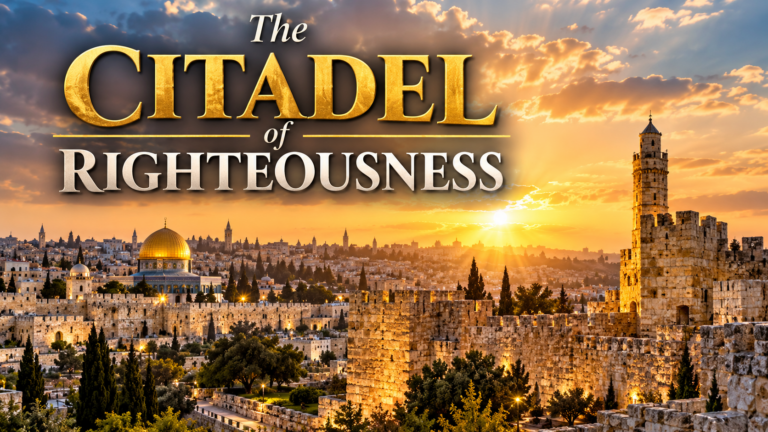
Arguably one of the most beautiful and symbolic structures in the world, the Churva Synagogue stands prominently in the Jewish Quarter of the Old City of Yerushalayim. The shul was initially built by the followers of Rebbe Yehudah HaChasid in the early eighteenth century, only to be destroyed by Arab creditors. It was rebuilt again in the 1850s by the disciples of the Vilna Gaon – and again destroyed, this time by the Jordanians in 1948.
Now, rebuilt for the third time, the Churva – deliberately named after its destruction – proudly stands as a symbol of the indomitable Jewish connection to Yerushalayim.
But a closer look at its reconstruction by the disciples of the Vilna Gaon reveals something even more profound.
To understand why this shul was so significant, we must transport ourselves back to the Old Ashkenazi Yishuv of Jerusalem that undertook its rebuilding. These holy Jews made the arduous and dangerous journey from Lithuania to Eretz Yisrael, settling in Jerusalem to immerse themselves in Torah with purity and yirat shamayim.
The conditions they encountered were brutal. The Arab populace made it nearly impossible for Jews to earn an honest living, forcing the community to rely almost entirely on charitable donations from Chutz La’aretz. Poverty and starvation were commonplace. The Jews suffered constant humiliation, extortion, and abuse at the hands of their Arab overlords.
Yet in the midst of this bleak and financially precarious existence, the community enthusiastically undertook the rebuilding of the Churva, an enormous and expensive project that would take years of sacrifice and investment. Despite barely having enough food to survive, they slowly raised the necessary funds and completed its restoration.
Which begs the question: why? Why should a straving community devote such immense resources to constructing a magnificent synagogue?
The answer lies in the teachings of their master, the Vilna Gaon.
The Gaon taught that the future redemption of Yerushalayim can begin only when Jews make physical efforts to rebuild it. An אתערותא דלתתא – awakening from below – arouses an אתערותא דלעילא – an awakening from above. Only once the physical vessel of Yerushalayim is restored can it again be filled with its heavenly soul; only then can the Shechinah return.
What better way to begin that process than by building a beautiful Beit Knesset in the heart of Yerushalayim?
The rebuilding of the Churva beautifully parallels Rebbe Yochanan’s interpretation (Ta’anit 5a) of a cryptic verse in Hoshea. The navi declares, “בקרבך קדוש ולא אבוא בעיר – among you will be holy and I will not enter the city.” At first glance, the verse seems baffling. Why would holiness distance Hashem from Yerushalayim rather than draw Him closer?
Rebbe Yochanan explains that Hashem is promising to not enter the heavenly Yerushalayim until the physical city below is rebuilt and sanctified. Hashem promises incredulously (“will I enter the city?”) that He will not restore Yerushalayim as the bridge between heaven and earth until the earthly Jerusalem is restored.
These Jews were not merely trying to beautify Yerushalayim. They were striving to sanctify it and to create a vessel worthy of the Divine Presence through the holiness of a Beit Knesset.
And despite the Jordanian attempt to erase this structure and the message it represented, the Jewish soldiers who reclaimed the Holy City – also through immense sacrifice – redeemed both its stones and its spirit.
On Yom Yerushalayim in particular, we must remember: the talmidei chachamim who built this beautiful shul – and the heroes who liberated its rubble so it could rise again – leave us with a dual mission. To build Yerushalayim and sanctify it, even at great cost. To restore the body and its soul, ensuring that the city rebuilt by Jewish hands once again becomes a dwelling place for the Shechinah.