No products in the cart.
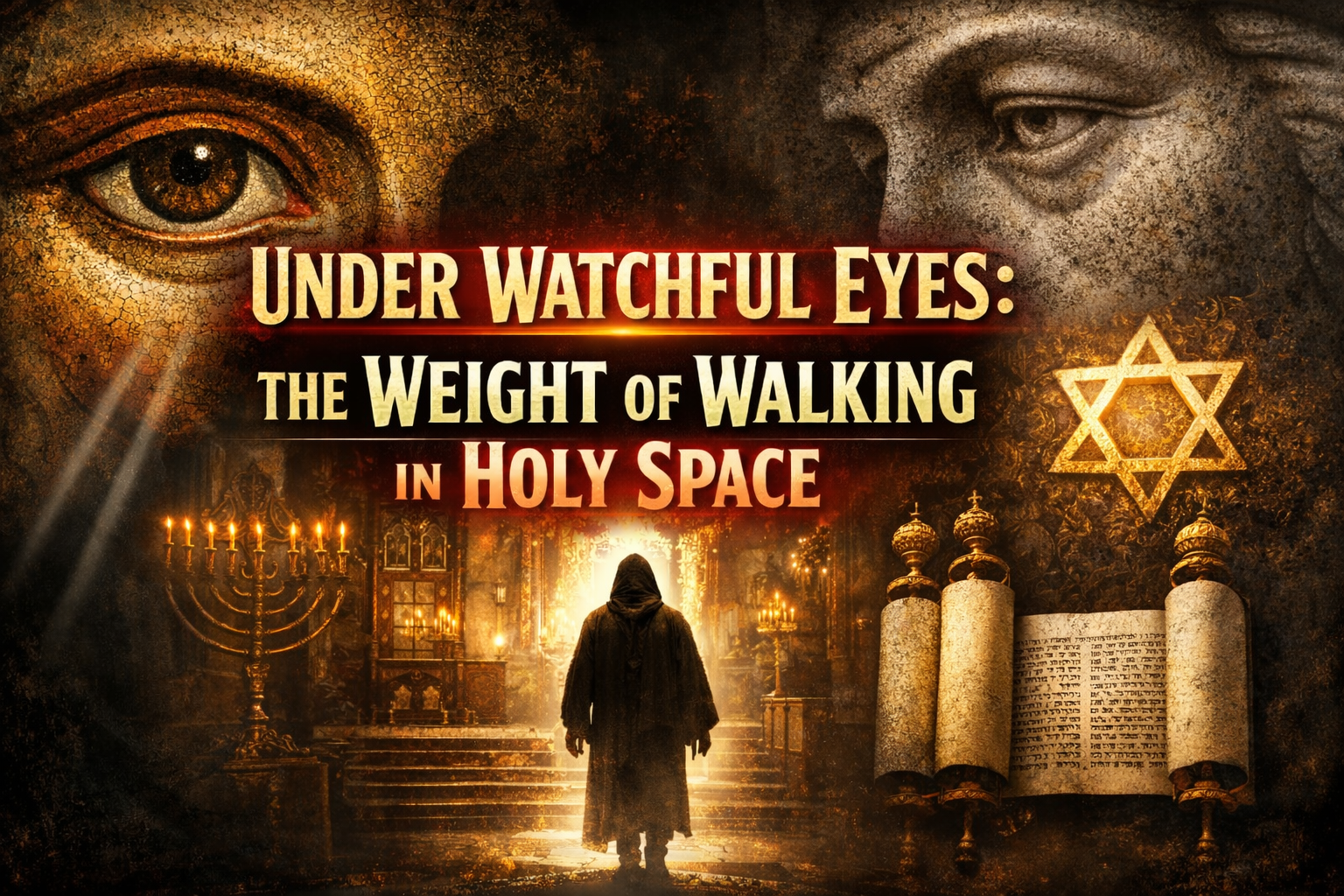
Under Watchful Eyes: The Weight of Walking in Holy Space
 Rabbi Reuven Schrier
Moshe Rabbeinu, the greatest prophet and leader of the Jewish people, was chosen by Hashem as he humbly shepherded his father-in-law’s sheep in the desert of Sinai. Chazal famously explain that it is specifically Moshe’s selfless behavior when caring for his flock that proved his worthiness to be the shepherd of Klal Yisrael (Shemot Rabbah 2:2). Even as Moshe traverses the barren desert – oblivious to the close Divine scrutiny following his every move – Hashem is closely watching.
Citing the verse in Tehillim 11 (4-5), Chazal associate Hashem’s watchful Presence in the midbar to Yerushalayim Ir HaKodesh, even as it lays in ruin:
Hashem is in His Holy Temple. Hashem – His throne is in Heaven; His eyes see, His pupils test the sons of men. Hashem examines the righteous…
Based on these pesukim, Chazal argue as to whether the Divine Presence of Hashem remained in Yerushalayim even after its destruction. While one opinion asserts that Hashem is now solely “in Heaven” and not present in His destroyed Temple, the Midrash goes on to quote many sources arguing otherwise. Hashem promised Shlomo HaMelech that His “eye and heart” would remain in the Temple forever (Divrei HaYamim 2, 7:16).
The Midrash therefore asserts that even after the destruction of the Temple – even after the holy city was reduced to a barren desert, bereft of Jewish presence – the Divine Presence never left the Har HaBayit. Rebbe Acha further asserts that Hashem’s Presence still “stands behind” the Western Wall of the Temple. The verse in Tehillim is alluding to the fact that even when the Divine Presence is deeply hidden – giving the impression that Hashem’s throne is exclusively found in heaven – Hashem still intimately dwells among the ruins of Yerushalayim.
While Jews have always taken great comfort in the never ceasing Presence of HaKadosh Baruch Hu in Yerushalayim, this Midrash reveals a crucial consequence of the intense Divine hashgacha that exists in the holy city. Along with intense Divine manifestation comes intense Divine scrutiny: “His eyes see, His pupils test the sons of men.”
This creates an ironic twist. Even though we can easily walk the streets of the holy city oblivious to the awesome kedushah that rests in her every stone, we are still being closely inspected, examined, and judged as in the days of yore in which the Beit HaMikdash stood in all of its glory. Although the Divine Presence is not obviously on display, our behavior must reflect the reality that the city remains Hashem’s sanctified abode.
Our ability to walk in the streets of the Old City and approach the sanctified Western Wall is truly miraculous. Yet the ease with which we do so can dull our awareness of where we stand, that Hashem still “peers through the cracks.” The intense sanctity of Yerushalayim demands a higher level of sanctified behavior. We may come to Yerushalayim as sight-seeing tourists, forgetting that the city watches back. To walk her streets casually is a privilege but also a test. Even without a visible Mikdash, the demand remains unchanged: our actions must reflect that we are standing before God.