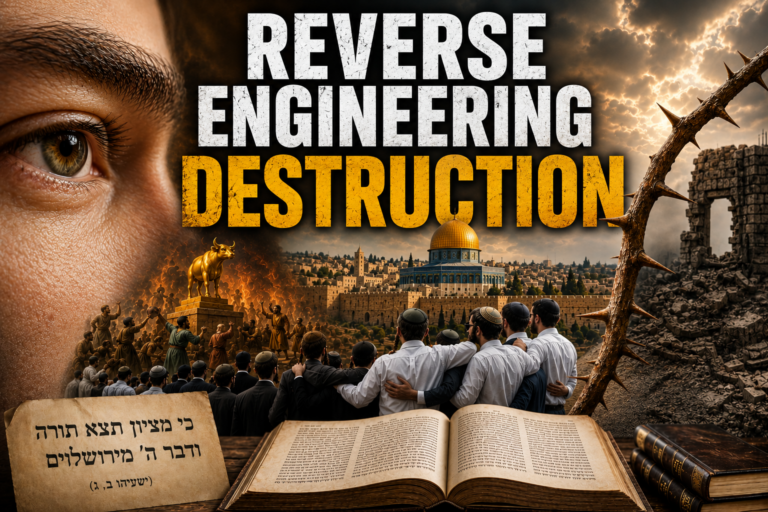
Why Do Selichot Keep Returning to Yerushalayim?
 Rabbi Reuven Schrier
The days of Elul and Aseret Yemei Teshuva are filled with the prayers of selichot. Naturally, we assume that selichot are about rectifying our personal mistakes and achieving kapparah as we draw close to Yom Kippur. Indeed, much of our selichot liturgy focuses on personal flaws, confession, and regret over those mistakes. We beg Hashem to accept our flawed selves and restore our purity.
And yet, a strikingly large percentage of the selichot tefillot and piyyutim do not actually describe personal mistakes or punishments. Instead, they focus on national destruction, exile, and the ruins of Yerushalayim. It is not a coincidence that the culmination of our prayers, immediately before reciting Shema Koleinu, is filled with several references to national redemption and the restoration of Yerushalayim. Many congregations sing the famous verse in Yeshayahu (56:7) with mournful yearning, dreaming of the day that Hashem brings us back to His holy mountain and restores His House of Prayer.
Many piyyutim focus on our degraded state in exile, personifying Yerushalayim as a bereft mother yearning for her children. We beg Hashem to wipe away our shame and restore us to His side in His holy city.
No piyyut better captures this seemingly obsessive focus than Selichah 73 – recited on the third day of Aseret Yemei Teshuva – in which every stanza begins and ends with the word ירושלים. Descriptions of Yerushalayim – her days of glory, her descent into destruction, and her eventual restoration – permeate the entire selichah. Read in isolation, one would assume that it is a kinah from Tisha Be’Av, not a part of the Yomim Noraim liturgy.
This focus seems to be out of place. We are doing teshuva, trying to repent and achieve atonement for our personal mistakes. And yet, our heartfelt, desperate prayers seem to keep drifting back to Yerushalayim and our national degradation. Why?
Perhaps the answer is that teshuva was never meant to be merely personal.
It is clear that Yerushalayim’s destruction is not only a physical expression of our national failures, but of our personal ones as well. Every single Jew is spiritually connected and interwoven with each other, like cells within a single body. Our personal mistakes do not remain localized, but rather affect the rest of the body of Klal Yisrael. As every individual Jew recites selichot, he or she is taking responsibility not only for personal wrongdoing, but for their share in the collective failure of Klal Yisrael to restore our relationship with Hashem.
This is especially true when we turn our attention to Yerushalayim. A Jew realizes that his intimate, personal relationship with Hashem is inseparable from the destiny of the Jewish people as a whole. Yerushalayim is the city in which all Jews come to recognize their shared destiny, their common body and soul.
Perhaps this is why our prayers for forgiveness so often lead us back to Yerushalayim. We cannot truly repair ourselves while remaining indifferent to the brokenness of Klal Yisrael. And we cannot fully return to Hashem while His people remain scattered, and His city lies in ruins.