The Prophecy in the Traffic Jam
 Rabbi Reuven Schrier
The Prophecy in the Traffic Jam
Please allow me to share a personal story.
Over the summer, I have the distinct privilege of teaching the young men of OU-JLIC’s summer internship program. Appropriately named SIJM (Summer in Jerusalem for Men), we have been studying Masechet Makkot together right outside the walls of the Old City.
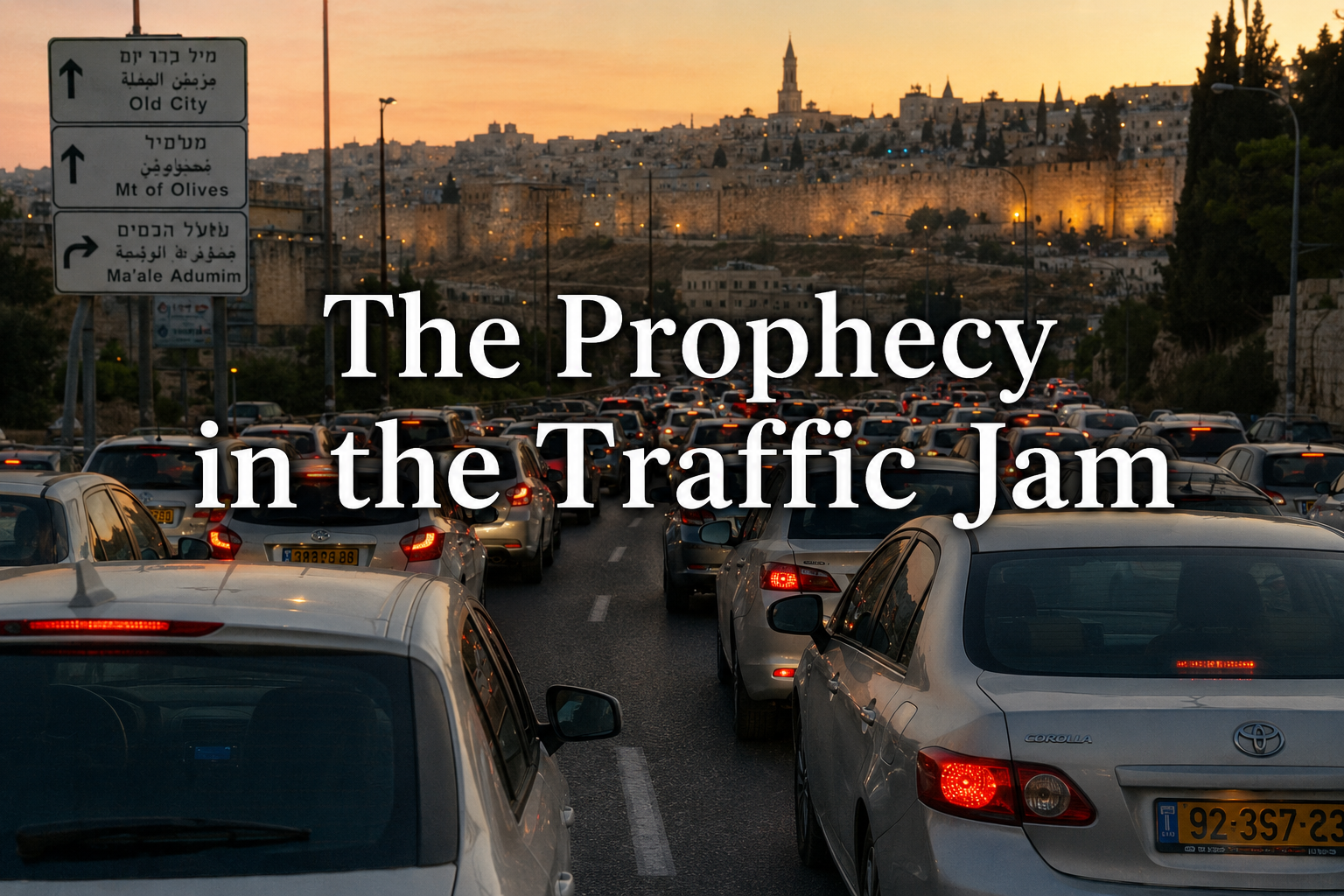
Normally, the drive from Beit Shemesh to Jerusalem takes about forty-five minutes. But this past Tuesday, I noticed my ETA steadily creeping upward. What was causing the delay? There were no accidents, no protests, no security incidents or red alerts. Just an endless stream of cars, thousands of people all heading toward Jerusalem at precisely the same time as me. Minute by minute, the cushion of extra time I had built into my schedule disappeared.
The congestion stretched on for kilometers, briefly eased, and then returned with full force as I approached the Old City. My blood pressure rose with every passing minute. Thankfully, I arrived with enough time to give shiur.
After ma’ariv, I began the drive home. Only to hit traffic…again. This time, the city streets themselves were clogged. Only after leaving Jerusalem behind did the roads finally open and the cars begin to move freely.
Traffic is maddening, and I openly confess that I do not handle it particularly well.
Then I read this week’s haftarah.
In this week’s Haftarah of Consolation, Yeshayahu (49) describes both Yerushalayim’s utter devastation and her future restoration. Those who destroyed her will be driven away, while her children will return to fill her streets. They will adorn the city like the jewelry of a bride. So many will come home that Jerusalem will become cramped.
The Navi records the remarkable words her returning children will say: “צר לי המקום גשה לי ואשבה – the place is too cramped for me, make room for me that I may dwell.” Yerushalayim will respond with astonishment: “מי ילד לי את אלה – Who has borne these children for me?… I was left alone; where have these come from?”
As I read those words, I realized what a fool I had been.
Only days after Tisha B’Av – after mourning Yerushalayim’s destruction and yearning for her restoration – I had spent an entire drive grumbling about traffic while heading into Yerushalayim to teach Torah. Around me were thousands upon thousands of fellow Jews, all making their way to the holy city.
The frustration I was complaining about was itself an expression of Yeshayahu’s vision. The crowded roads. The grinding traffic. The endless procession of Jews coming to Yerushalayim. Even my exacerbated complaints about there not being enough room echoed the Navi’s words: צר לי המקום – the place is too cramped for me.
These are the inconveniences for which Yerushalayim had yearned for thousands of years.
If we can calm ourselves for a moment, instead of devolving into the mundane madness of traffic, we would be able to hear the whispers of her astonished heart: “Who has borne me these children? Where have they all come from?”