The Palace of the King

After the spies’ slanderous lies about the Land of Israel, Yehoshua and Kalev stand up and say the following:  The land that we traversed and scouted is an exceedingly good land. If God is pleased with us, He will bring us into that land, a land that flows with milk and honey, and give it […]

Explore more

The “Eye” of God

When Yitro tells Moshe that he wants to go back to Midian, Moshe tries to convince Yitro to stay. He describes the special status that Yitro would have amongst the Jewish people in the desert and then in the Land of Israel: Please do not leave us, inasmuch as you know where we should camp […]

Explore more

Flowing of Peace

This week’s parsha contains the blessings that the Kohanim are to relay to the people. In many ways, these three verses become the paradigmatic blessings of Judaism – they are recited daily in our prayers, in Israel the Kohanim use them to bless the people daily and parents often use them to bless children on […]

Explore more

The Congregation of Jerusalem

God’s opening command in this week’s parsha to count the Jewish people refers to them as a “congregation” (eidah). What is the meaning of this term? Rav Hirsch explains that the word eidah is related to the word yi’ud which means goal or destiny. The deeper meaning of this is that an eidah refers to […]

Explore more

Strangers At Home

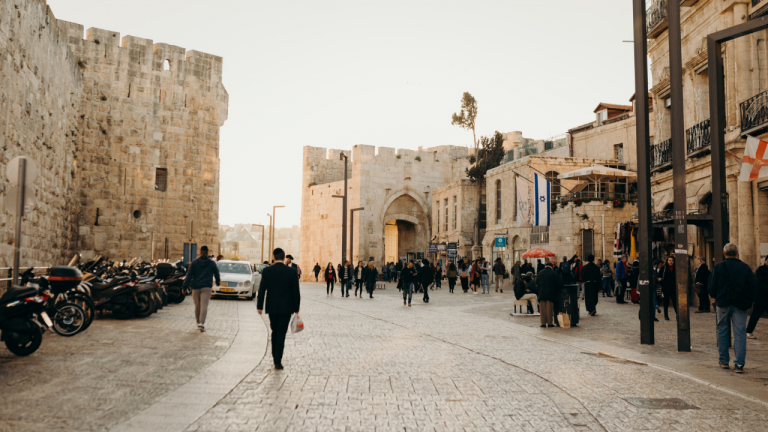
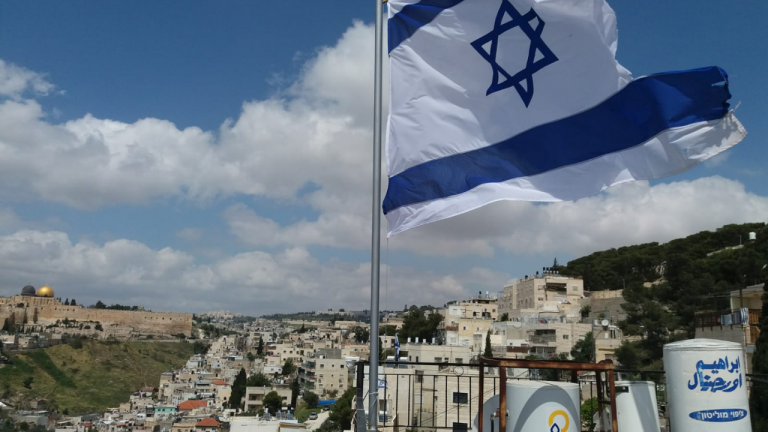
This Monday we will be celebrating the 54th birthday of renewed Jewish sovereignty over the Old City of Yerushalayim. We have much to be thankful for. Yerushalayim of today is teeming with Jews and Jewish life in a way that has not existed since the days of the second Beit HaMikdash. Not for the last […]

Explore more

The Demands of Jerusalem

From our earliest sources, we find that the people of Yerushalayim took upon themselves a higher level of stringency than the average Jew. For example, the Mishna in Sukkah relates that the residents of Yerushalahyim would carry their Lulav and Etrog the entire day. Fast forwarding two thousand years, the custom of Yerushalayim today is […]

Explore more

Creating Context by Remembering Jerusalem

Towards the end of our parsha, nestled between the mitzvah of Orlah and the prohibition against forms of witchcraft is an enigmatic phrase: “You shall not eat over the blood.” Ramban explains that on a literal level the verse relates to the practice of idolatrous priests who would eat blood during their magical rites. However, […]

Explore more

Seeing the Hand of God

In this week’s parsha we learn about the mysterious affliction of tzara’at. The Talmud teaches that though it manifests as a form of leprosy on the body, in reality, tzara’at is caused by specific sins. The most basic lesson of tza’arat, then, is the severity of these sins and to heal/repent from them. The Sefer […]

Explore more

A Divine and Human City

In the aftermath of the death of Nadav and Avihu, unclarity entered what was supposed to be an extremely well-planned and choreographed day. The Kohanim were now mourners and it was unclear what they were to do regarding the meat of the sacrifices. The Torah tells us that Moshe discovered that the sin-offering was burnt: […]

Explore more

The Conversation of Jerusalem

This Shabbat we have the privilege of reading two different songs: the song of Moshe and the Jewish people at the shores of the Yam Suf and Shi HaShirim, written by King Shlomo of Yerushalayim. The midrash notes that while all songs in the Torah are referred to as “Shir” in the singular, Shlomo’s song […]

Explore more