At the end of this weeks’s parsha we read about the uniqueness of Moshe Rabbeinu’s prophecy: “With him I speak mouth to mouth; in a vision and not in riddles, and he beholds the image of the Lord.” All other prophets had their visions through an unclear lens, while Moshe saw through a clear glass. […]
Explore moreThe laws of the Sotah are a vehicle to achieve “tzedek” (justice) and “shalom” (peace). It is the absence of these elements in a marriage that triggers the Sotah process, meaning to say a situation in which no one knows if a wife committed adultery, such that she cannot be pronounced as innocent or guilty […]
Explore moreThere is great significance to the fact that God gave us the Torah in the desert and not in Yerushalayim, the capital of the Land of Israel. One midrash hints to the fact that if the Torah was given in the Land of Israel one might think that these two great gifts are bound together […]
Explore moreIn the beginning of our parsha, God commands Moshe to take a census of the Jewish people. On one hand, such a count can be a dehumanizing experience in which each person is ripped of his uniqueness and transformed into a mere number. However, this was not the case with Moshe’s count. Crucially in this […]
Explore moreOur parsha teaches that every seven years the farmer in the Land of Israel must leave their land fallow. The commentators have raised several reasons for this commandment. One common theme is that this mitzvah is beneficial for the spiritual life of the nation. For example, S’forno explains that the Torah wants the Jewish person […]
Explore moreIn regular years, thousands of Jews leave Jerusalem on Lag B’Omer and travel to Meron. This year, however, Lag B’Omer will be celebrated by Jerusalem at home, within the city of Jerusalem. What is the significance of this celebration? Is there anything special about the celebration of Lag B’Omer inside Jerusalem? Lag B’Omer appears in […]
Explore moreIt is not by chance that the parsha following Yom HaZikaron and Yom Ha’atzmaut this year is Acharei-Mot. The structure of the parsha, perhaps, teaches us a lesson regarding this time of the year. The first topic of this week’s Torah reading is the service Yom Kippur. The highlight of this service is when the […]
Explore moreAfter describing the type of leprosy that makes a person a metzora, the Torah describes some of the relevant rules of his state: “He is unclean; he shall dwell isolated; his dwelling shall be outside the camp.” The Torah mandates social isolation for the metzora – he must stay outside the camp until the purification […]
Explore moreThe song that Moshe and the Jewish people sang at the sea is roughly divided into two parts. The first part relates to the miracles that God has just performed for them at the sea. The second half, however, looks forward to their entry into the Land of Israel. This second part of the song […]
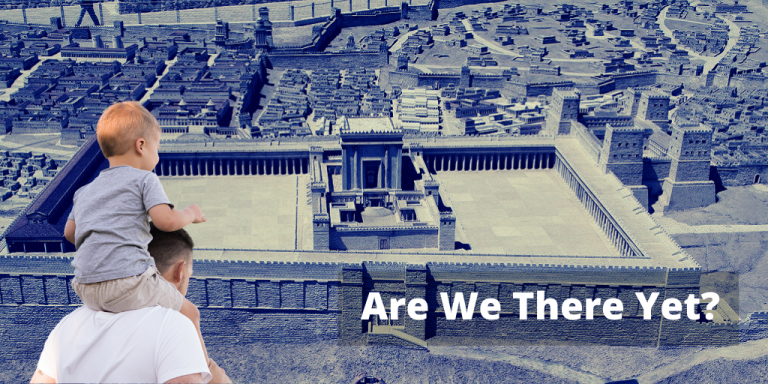
Explore moreIn the Ashkenazi tradition, the final stage of the Seder – Nirtzeh – opens with a the prayer/song of “Next year in Yerushalayim!” What is the meaning of this custom? While many commentators emphasize the unique relationship between Seder night and Jerusalem (as ideally the Seder should be experienced in Jerusalem with a Korbon Pesach), […]
Explore more