Encountering God in the Guests of Yerushalayim

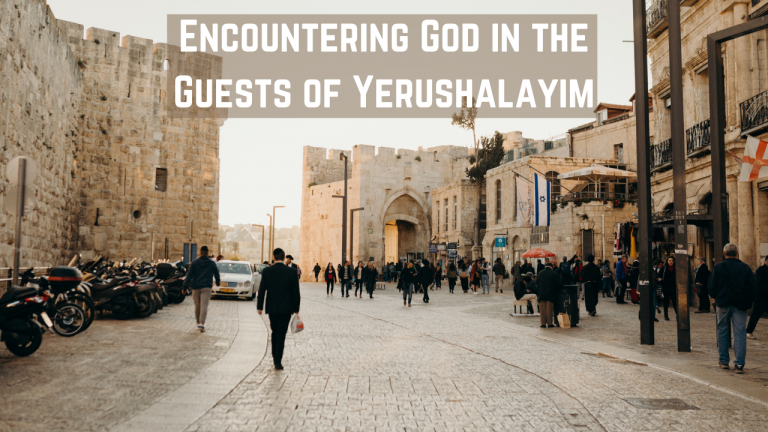
This week’s parsha begins with an anomaly.  God appears to Avraham who is sitting by at the entrance of his tent. Suddenly, Avraham seems to abandon God by running towards the three travelers.  Bothered by this seeming lack of respect to God, the Talmud concludes from this story that “Bringing guests into one’s home is […]

Explore more

A Dual Journey to the Center

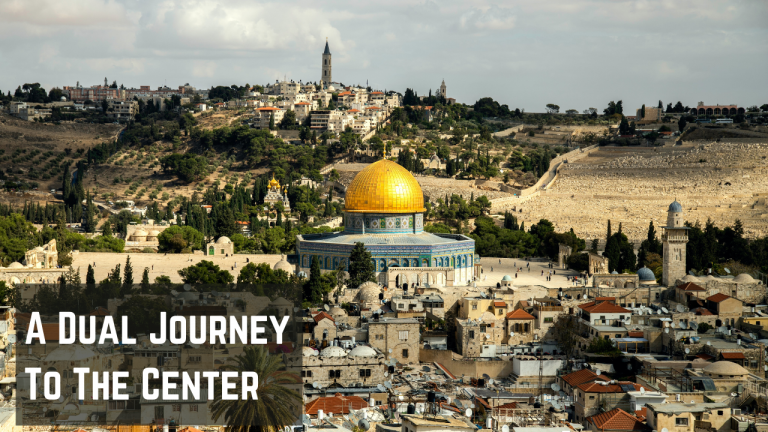
This week’s parsha opens with God’s epic command to Avraham: “Go forth (Lech Lecha) from your land and from your birthplace and from your father’s house, to the land that I will show you.”  The simple understanding of this command is that Avraham was commanded to “go,” meaning to travel to the Land of Israel.  […]

Explore more

The Portal of Yerushalayim

Besides the basic wood and tar necessary to build a boat, God tells Noah that the teivah requires one more item:  “A Tzohar you shall make for the teivah.”  What is a Tzohar?  Rashi cites two opinions from a midrash: Some say [that it was] a window, and some say [that it was] a precious […]

Explore more

Jerusalem As A Process

The Torah opens with God creating the world. One would think that God’s creation would be perfect, an ideal setting within which to live.  And while there is much beauty and order in the cosmos, we know that God intentionally did not create a perfect world.  The final verse of the creation story is: “And […]

Explore more

The Joy of Completion

The only day in the Jewish calendar that contains the word “simcha” (joy) in its title is Simchat Torah. What are we celebrating on this day?  What is the source of this day’s unique joy?  While there are a variety of deep and mystical explanations, the most basic reason for the celebratory nature of Simchat […]

Explore more

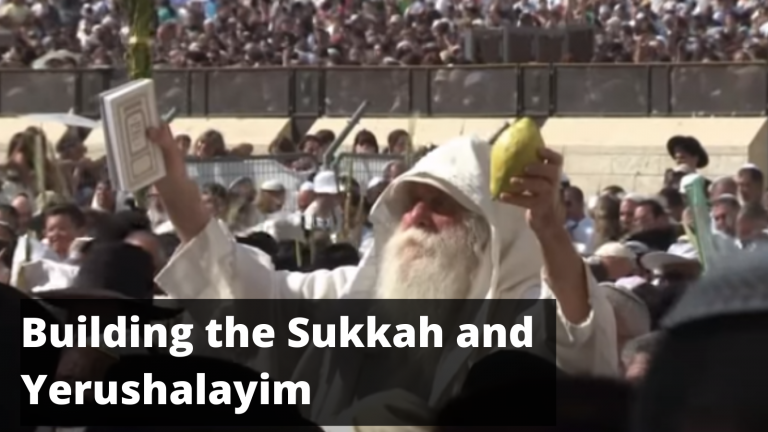
Building the Sukkah and Yerushalayim

On Sukkot there is a mitzvah to dwell in the Sukkah – “in sukkot you shall dwell for seven days.”  At first glance, it would seem that since the mitzvah begins on the Chag itself that is the time that the sukkah becomes significant.  However, a survey of some halachik sources indicates that the building […]

Explore more

Teshuva As A Return to Jerusalem

This week’s haftorah very fittingly is focused on teshuva.  Hoshea movingly tells the people to take stock of their spiritual state and return to God.  One would think that the haftorah would focus on the impurity of sin, the need to contemplate the direction of our individual and national lives and the need to engage […]

Explore more

Coronating God in Jerusalem

This year the first day of Rosh HaShanah occurs on Shabbat and therefore we refrain from blowing the shofar.  While this is the universal Jewish practice nowadays, the Mishna teaches that in the Beit HaMikdash they would blow the shofar on Shabbat.  Rambam, in his commentary to the Mishna, asserts that this is true throughout […]

Explore more

Teshuva in Jerusalem

On this final Shabbat of the year, we fittingly read about the mitzvah of teshuva (repentance).  After describing the Jewish people’s exile and eventual return to God and to the Land of Israel, the Torah describes the accessibility of repentance: “For this commandment which I command you this day, is not concealed from you, nor […]

Explore more

Jerusalem of Fear and Joy

We generally think of simcha (joy) and yirah (fear) as mutually exclusive feelings.  Experiencing fear or even the solemnity of an awe-inspiring event is not conducive to happiness and joy.  However, the Torah teaches that this is not the case but posits that the highest levels of fear and joy can coexist and even strengthen […]

Explore more