

The End of the Journey
Our parsha opens with a list of the forty-two stations at which the Jewish people stopped in their journey through the desert. The commentators discuss why this section needed to be included in the Torah. What are the future readers of the Torah to gain by reading this long list of stations? The Akeidat Yitzhak […]
Explore more
For the Love of Zion
The end of our parsha focuses on the request of the tribes of Reuven and Gad to stay on the eastern side of the Jordan River and not in the Land of Israel proper. Even though they and Moshe reach an agreement that is amenable to both parties, nonetheless, the Rabbis are critical of their […]
Explore more
The Humility of Jerusalem
When the time came for Moshe to choose the next leader of the Jewish people, he naturally thought of his own children. However, it was not to be. In a choice that apparently surprised even Moshe, God told Moshe to appoint his student Yehoshua in his place. Yalkut Shimoni teaches as follows: Moshe thought that […]
Explore more
Seeing the Good of Jerusalem
In the beginning of one of his attempted curses, Bilam refers to himself as setum ha-ayin. The word setum is not easily translated and the commentators debate if this means that his eye was closed or open. The Or HaChaim explains that Bilam had the capacity to damage via his gaze. When he wanted to […]
Explore more
The Holistic Delight of Jerusalem
In the midst of the Torah’s discussion of the laws of ritual impurity contracted via contact with a corpse, the following phrase appears: This is the ritual (Torah): When a person dies in a tent, whoever enters the tent and whoever is in the tent shall be impure seven days. The Talmud homiletically interprets this […]
Explore more
The Peaceful Strength of Jerusalem
The midrash compares Korach to the subject of the following verse in Mishlei: “A rebellious brother – a strong city.” Korach was a brother – a leader within his nation and a relative of Moshe and Aharon. The “strong city” refers to the Torah, which Korach attacked. The prooftext that a “strong city” refers to […]
Explore more
The Living City
The Land of Israel is a unique location. Most lands are merely places where people live, a setting for their lived experience. Land is inanimate. It is treated as part of one’s financial portfolio. The Land of Israel, though, is different. The Torah treats it as almost a sentient being that responds differently based on […]
Explore more
The Sensitivity of Jerusalem
Our parsha concludes with the story of Miriam speaking ill of Moshe and God punishing her with tzara’at. While this story does not seem to be of critical importance in relation to the other stories of the parsha, nonetheless, later in the Torah God commands the Jewish people to remember this incident. Some commentators even […]
Explore more
The World-Changing Torah of Jerusalem
At the end of the Torah, when Moshe retells the story of the Giving of the Torah, he says as follows: The Lord came from Sinai and shone forth from Seir to them; He appeared from Mount Paran and came with some of the holy myriads; from His right hand was a fiery Law for […]
Explore more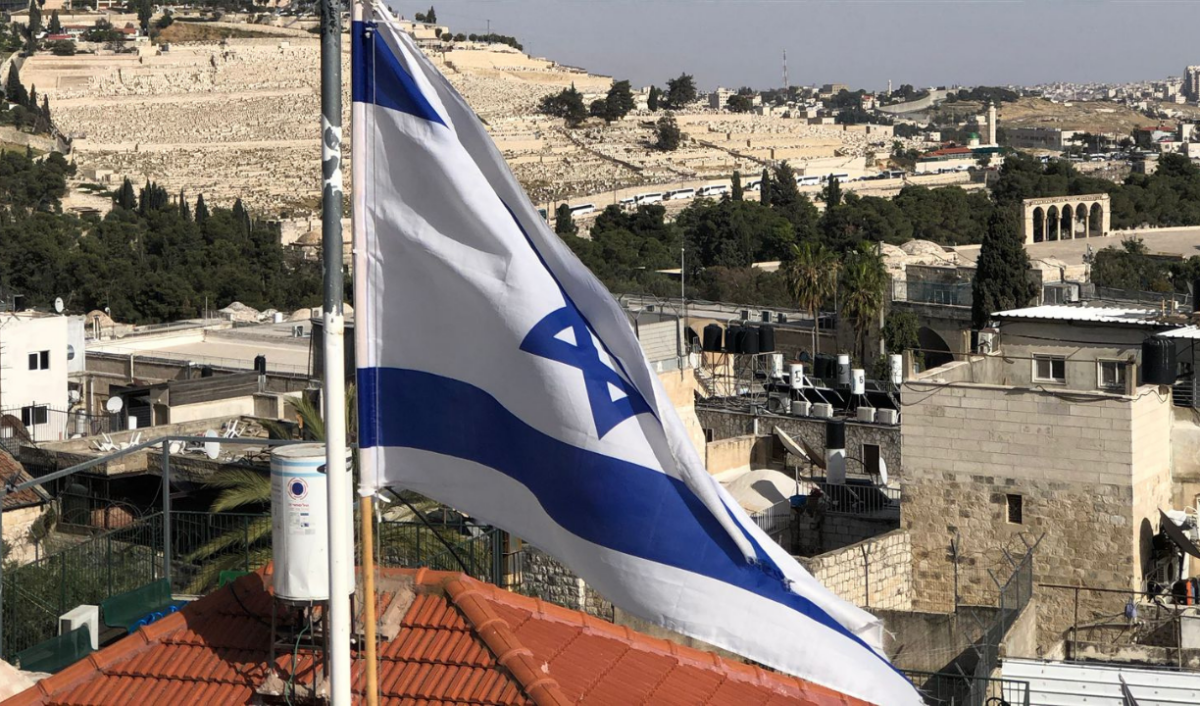
The Angelic Flag of Jerusalem
Shir HaShirim is a love song between God and the Jewish people. In one verse, God tells the Jewish people the following: “You are fair, my beloved, as Tirzah, comely as Yerushalayim, awesome as the bannered legions.” The Midrash in our parsha offers a variety of interpretations to this cryptic praise from God. One interpretation […]
Explore more