No products in the cart.
The Test of Truth
 Rabbi Reuven Schrier
In this week’s haftorah, the Navi Yeshayahu calls out to Yerushalayim with words of consolation and promises of eternal love. In describing the city’s future glory, Yeshayahu foretells immense physical and spiritual wealth. Once the city is established upon justice, righteousness, and moral refinement, peace and calm will reign. The enemies of Klal Yisrael will fail to harm them: “Any weapon sharpened against you shall not succeed, and any tongue that shall rise against you in judgment shall you condemn (Yeshayahu 54:17).”
Tucked away in these future promises is a cryptic verse:
הֵ֣ן גּ֥וֹר יָג֛וּר אֶ֖פֶס מֵֽאוֹתִ֑י מִי־גָ֥ר אִתָּ֖ךְ עָלַ֥יִךְ יִפּֽוֹל.
In the simple interpretation of this verse, the navi is referencing an oppressor who attempts to harm Klal Yisrael. This enemy will ultimately fail and fall before Klal Yisrael.
However, the Gemara Yevamot (24b) homiletically interprets this verse as proof for the practice to not accepting converts to Judaism during times of Jewish prosperity and power. The Baraisa teaches that conversions were not encouraged during the reigns of David and Shlomo, presumably because of concerns that conversion would be motivated more by base materialistic considerations than idealistic pursuit of truth (see Rambam to Issurei Biah 13:15). Rebbe Eliezer cites our verse as a source for this practice.
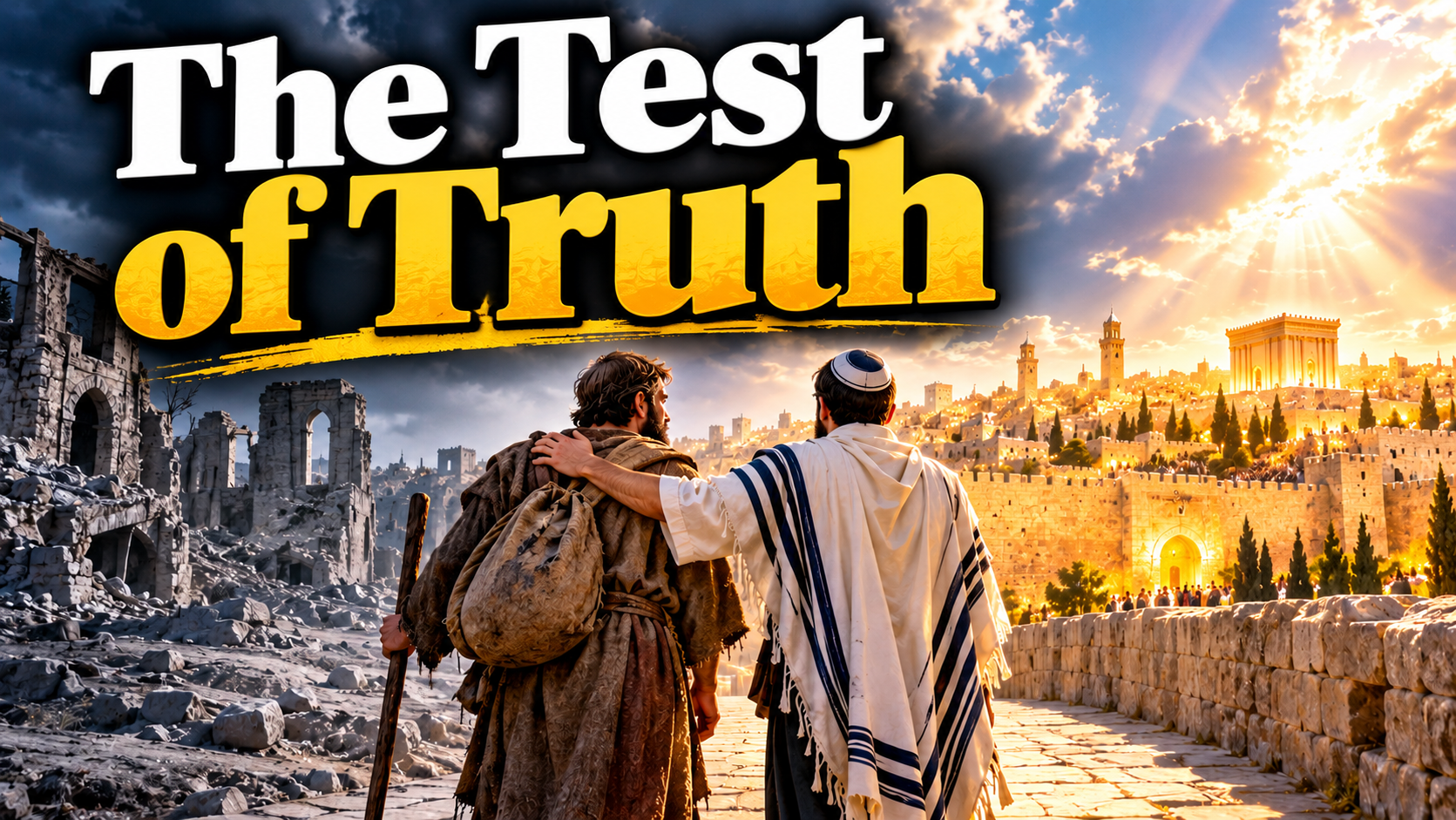
As Rashi there explains, the first half of the verse refers to the courageous gentile who chooses to join the Jewish people while Yerushalayim is still in ruin: הן גור – he who comes to convert. אפס מאותי – when I, HaKadosh Baruch Hu, am not obviously with you.
The second half of the verse describes our full-fledged acceptance of this convert. מי גר אתך – the one who joined you in your poverty, proving his loyalty and sincerity, עליך יפול – among you he will dwell.
By contrast, when a prospective convert seeks to join the Jewish people after Hashem casts down their enemies and Yerushalayim has been restored, he will be turned away.
On a superficial level, the Gemara seems to be saying that we question the authenticity of a prospective convert when there are so many lo lishma – inauthentic – motivations for converting. Rather than being motivated by a pure pursuit of truth, he may be cynically pursuing the material success and security that come with joining the Jewish people.
But perhaps the Gemara means something even deeper. Perhaps the concern is not necessarily that these future converts are fraudulent or insincere. Even when they are sincere, and have become thoroughly convinced that our Torah way of life is authentic and true, there may still be something missing from their desire to join the Jewish people.
Why are they only discovering the truth when Hashem’s revealed Presence rests in Yerushalayim? Where were they for the thousands of years of Jewish shame, degradation, and suffering? Is truth only worthwhile when accompanied by material success and security?
To accept converts only when Jewish fortunes have turned would risk lending credence to the very argument that has haunted our people for centuries: that Jewish suffering is evidence of divine rejection. Christian polemicists have repeatedly invoked the destruction of Yerushalayim and our suffering as proof that Hashem has abandoned the Jewish people. If we welcome those who recognize our truth only once our fortunes improve, we risk reinforcing the very association we must reject: that the validity of our covenant with Hashem depends on our material success.
It is the convert who yearned to join us even as our holy city lay in ruin, as we wallowed in the poverty of exile, who truly exemplifies the essence of Judaism. Such a person seeks the truth not because it promises success, but because it is the truth. His or her willingness to embrace that truth at any cost is a testament to a loyalty that transcends worldly pettiness.
The message of this Gemara Yevamot travels beyond the formal categories of conversion. We, too, are approaching a crucial turning point in history. Even after three years of protracted war, Medinat Yisrael’s surging economic success and rising levels of happiness have continue unabated. Yerushalayim, while still retaining in parts the charm of an ancient city untouched by modern sophistication, is experiencing a revival in which luxury and modern development are increasingly part of its landscape.
We are approaching a point at which it may become increasingly “tempting” to move here. The poverty of exile is receding. Prosperity and opportunity continue to grow. But with that blessing comes a challenge: will we be drawn to Eretz Yisrael because of its success, or because of its sanctity?
Every Jew must consider the priceless opportunity that may be slipping away: the chance to pursue Hashem’s Presence and the truth of His Torah even when that Presence is not readily apparent, even when our people are scorned, and even when the world seems to offer so many reasons to turn away.
One day, the glory of Yerushalayim will be undeniable. The greater test is whether we recognize its truth before that day arrives.