No products in the cart.
The Statues That Barred Zion
 Rabbi Reuven Schrier
After Sarah Immeinu was redeemed from Avimelech’s palace, the Plishti king attempts to ingratiate himself with Avraham. He initially showers Avraham with gifts, eventually requesting a peace treaty between himself and Avraham’s descendants (Bereishit 21:22-24). Avraham swears an oath, binding himself to this covenant of peace.
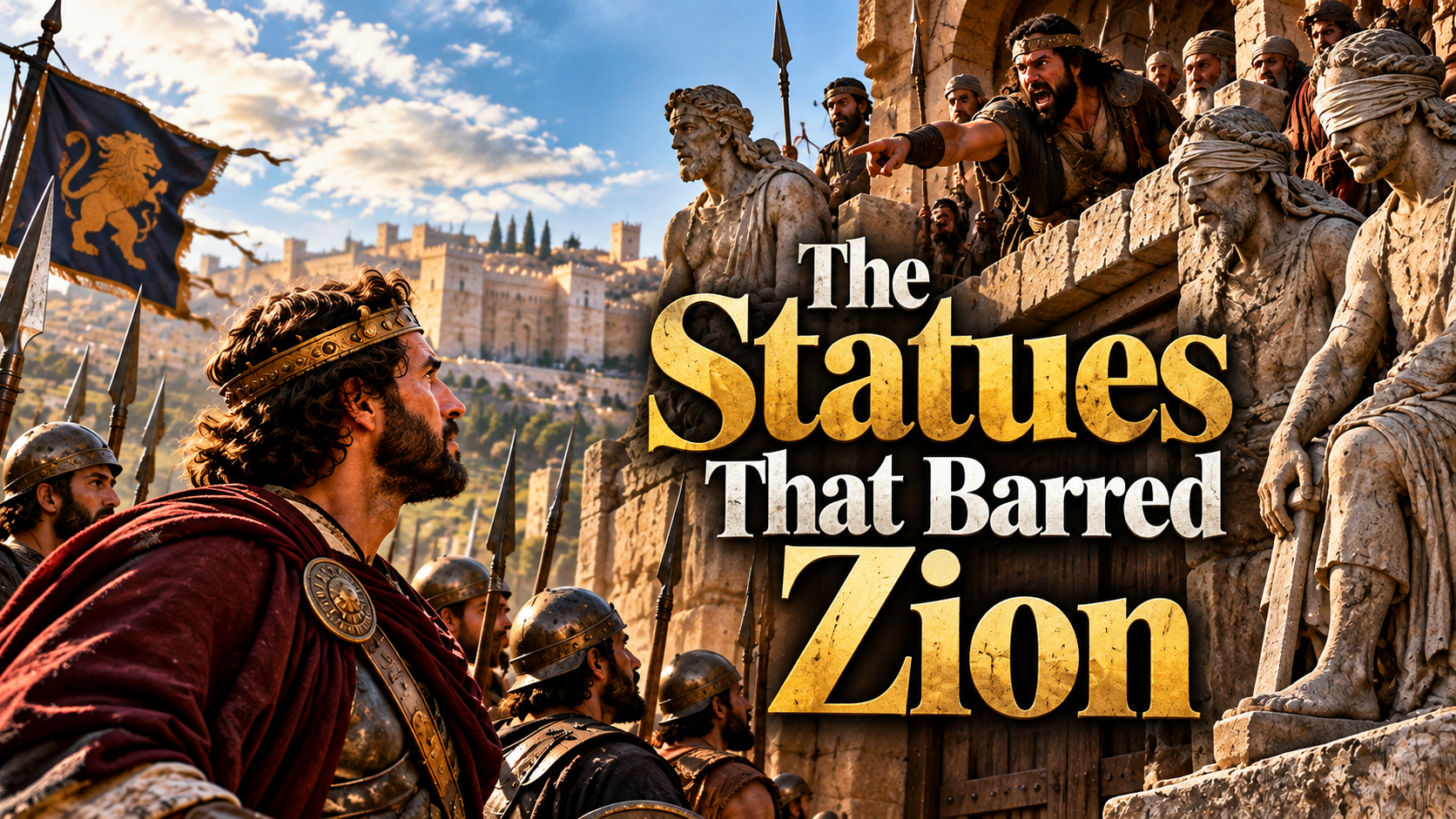
The oath seems harmless enough. However, Chazal trace an unforeseen consequence of this treaty, one that would be invoked to bar the Jewish people from an essential city for generations to come. Many years later, upon assuming the kingship of all Bnei Yisrael, David HaMelech ascends to conquer the Yevusi stronghold in the city of Yerushalayim (Shmuel Bet, 5). As David approaches the city, the Yevusiim launch a cryptic taunt towards him, confident that he will never succeed in conquering it:
(ו) וַיֵּ֨לֶךְ הַמֶּ֤לֶךְ וַֽאֲנָשָׁיו֙ יְר֣וּשָׁלִַ֔ם אֶל־הַיְבֻסִ֖י יוֹשֵׁ֣ב הָאָ֑רֶץ וַיֹּ֨אמֶר לְדָוִ֤ד לֵאמֹר֙ לֹא־תָב֣וֹא הֵ֔נָּה כִּ֣י אִם־ הֱסִֽירְךָ֗ הַעִוְרִ֤ים וְהַפִּסְחִים֙ לֵאמֹ֔ר לֹֽא־יָב֥וֹא דָוִ֖ד הֵֽנָּה:
And the king and his men went to Yerushalayim to the Yevusi, the inhabitants of the land, who spoke to David, saying: ‘you shall not come here unless you remove the blind and the lame’; as if to say: ‘David shall not come here.’
What is this bizarre reference to the “blind and the lame”? And why were the Yevusiim so confident that David would be unable to enter the city? Chazal (see Radak ad loc.) explain that the Yevusiim were cynically invoking the legacy of our holy Avot to deny us entry into the holy city.
First, they referenced the oath Avraham Avinu had made to Avimelech. The Yevusiim could trace their lineage back to the Plishti leader, claiming that Avraham’s oath protected them from his descendants. At the peak of their fortress, they prominently displayed two statues of a blind and lame man. This was another cynical reference to Yitzchak and Yaakov; Yitzchak became blind in his old age, while Yaakov was temporarily left lame after his struggle with the ministering angel of Eisav.
These statues mockingly reinforced the Yevusi claim that Avraham’s descendants had no right to conquer the city. By invoking Avraham’s oath and displaying statues that mocked the infirmities of Yitzchak and Yaakov, the Yevusiim sought to portray the holy Avot as powerless, incapable of overcoming their fortifications.
The Navi goes on to describe David’s desperate desire to remove these “hated statues”. Eventually, Yoav penetrates the Yevusi’s fortress and tears them down, paving the way for the conquest of Yerushalayim.
Symbolically, the Yevusi taunt represents our enemies’ attempts to prevent an ascendant Klal Yisrael from claiming its rightful inheritance. Precisely when the Jewish people grow powerful enough to reclaim what is theirs, the language of peace and friendship can be turned against them.
Never mind that the Plishtim harassed Yitzchak Avinu when he was vulnerable. Never mind that the covenant made with Avraham Avinu was invoked not to foster peace with his descendants, but to deny them their inheritance. The Yevusiim had taken the legacy of our holy Avot and transformed it into an argument against the Jewish people’s return to Yerushalayim. They understood the power of that legacy, but grotesquely distorted its meaning, turning a covenant of peace into a weapon against the Jewish people’s rightful claim to their inheritance.
But the oath would not have the final word. Yoav breached the fortress, the statues were torn down, and David HaMelech established his capital in the city that would become the eternal heart of Klal Yisrael.