From Fear to Firepower: Israel Just Rewrote the Rules
 David Mark
There was a time—not long ago—when Israel hesitated.
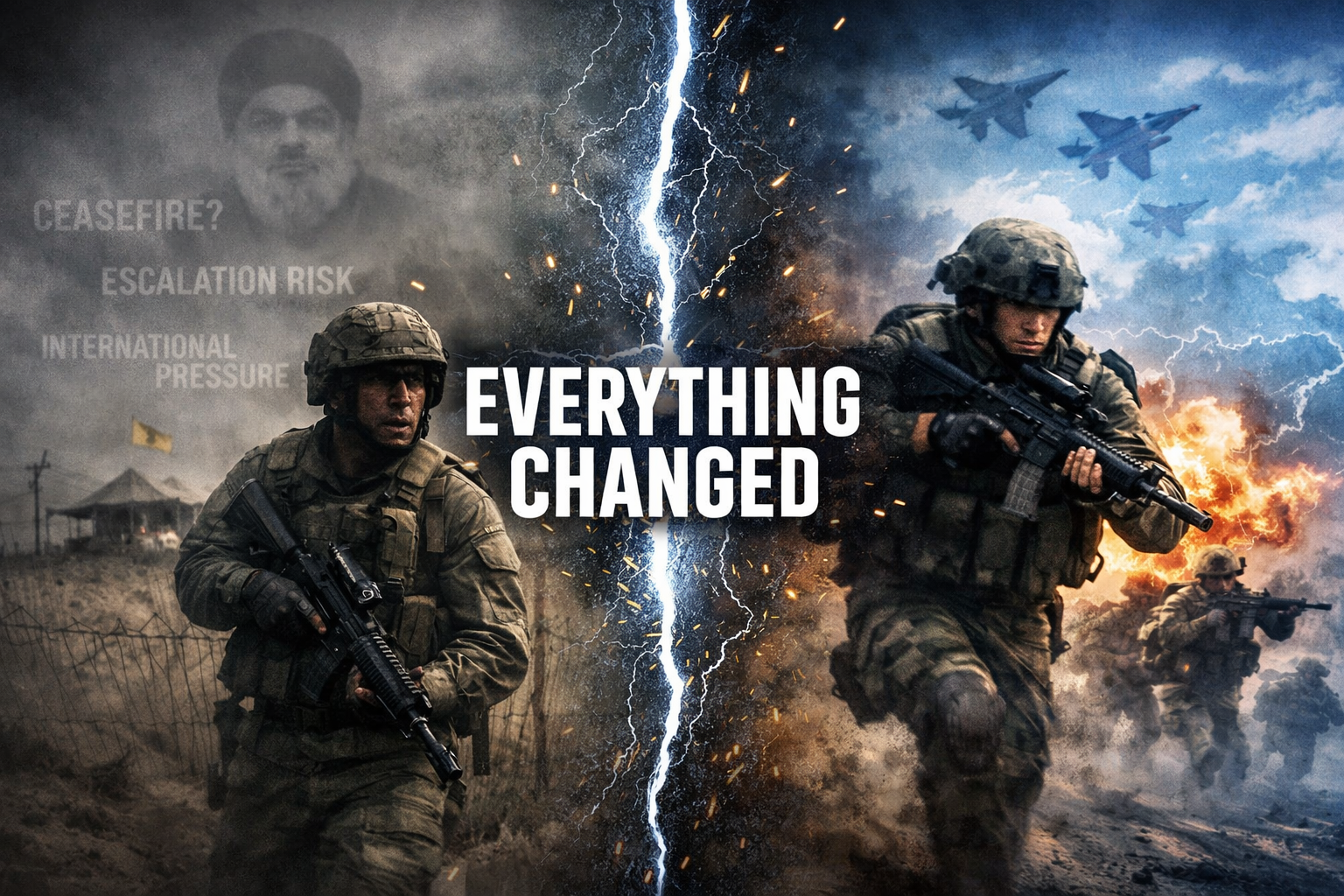
A single Hezbollah tent in the Shaba Farms area became a national dilemma. Weeks of deliberation, warnings, diplomatic signaling. The question wasn’t just operational—it was psychological. What would Hezbollah do? What would the UN say? How would Europe react? Would Washington approve?
That hesitation wasn’t about capability. It was about mindset.
Before October 7, Israel was trapped in a framework of constraint—internal and external. The domestic front was fractured, with the Kaplan protests dominating the national conversation. The security establishment projected caution as wisdom. Media panels filled with former generals confidently explained why certain actions were “too dangerous,” “too escalatory,” or simply “not realistic.”
Gaza? A full-scale operation was framed as reckless.
Lebanon? Untouchable.
Iran? A distant abstraction, discussed in hypotheticals and dismissed in practice.
Meanwhile, Hezbollah leader Hassan Nasrallah mocked Israel openly—confident not just in his arsenal, but in Israel’s hesitation.
October 7 shattered that illusion.
Not just because of the attack itself—but because it exposed the cost of living inside that constrained mindset. The belief that restraint would buy stability. The assumption that managing threats was safer than confronting them.
Since then, something deeper has shifted.
Israel is no longer operating from fear of headlines. It is operating from clarity of survival.
The same country that once debated a tent is now reshaping entire battlefields. Gaza is no longer “untouchable.” Lebanon is no longer “off-limits.” And the idea of projecting power toward Iran—once dismissed as fantasy—is now part of serious strategic discussion.
This is not just a military shift. It’s a psychological reset.
The old questions—“What will the world say?”—are being replaced with a harder one: “What must be done?”
That doesn’t mean recklessness. It means prioritization. Survival over optics. Reality over narrative.
And here’s the deeper point most analysts miss: deterrence is not rebuilt through statements—it’s rebuilt through actions that break the enemy’s assumptions.
For years, Israel’s enemies operated under a shared belief: that Israel had limits it would not cross. That belief shaped their aggression.
Now, that belief is eroding.
The region is watching a different Israel emerge—one less constrained by external approval, less paralyzed by internal division, and more willing to act on its own timeline.
The transformation isn’t complete. Internal debates remain. External pressure hasn’t disappeared.
But the direction is unmistakable.
What once sounded like “la la land” is now being quietly recalculated in war rooms across the region.
Not because Israel changed its capabilities.
Because it changed its threshold.