No products in the cart.
Rechovot: The Wellspring of Redemption
 Rabbi Reuven Schrier
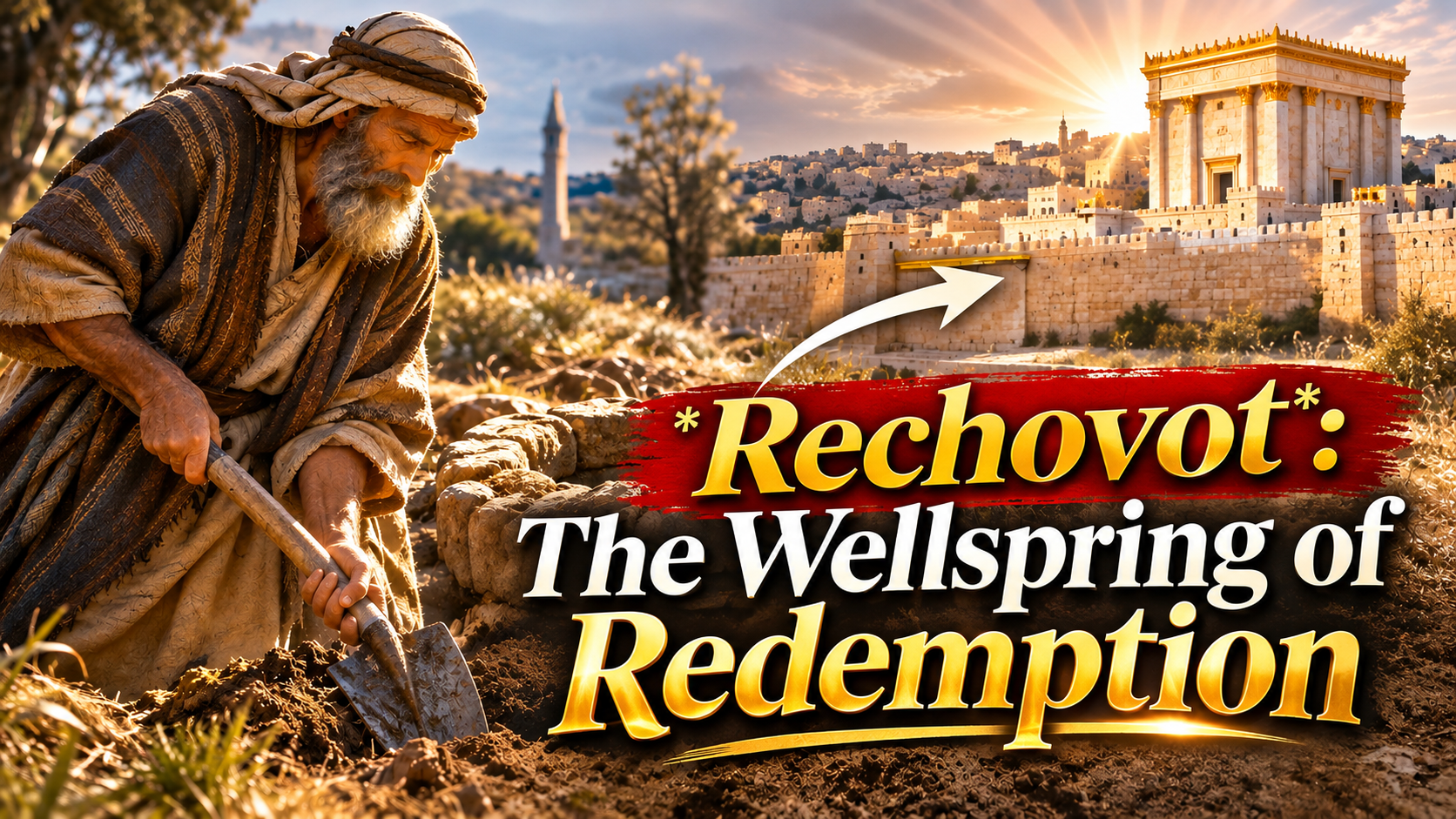
After Yitzchak Avinu is driven out by the Plishtim, he begins to dig a series of wells. The Torah uncharacteristically describes these wells in considerable detail, including the disputes that arose between his shepherds and the shepherds of Grar over them. The first two wells were named Eisek and Sitna, reflecting the ongoing hostility of the Plishtim. Finally, Yitzchak digs a third well that remains uncontested. He names this well Rechovot.
Why is the Torah providing so much detail about stories of such seemingly insignificant well digging?
The Ramban (Bereishit 26:20) explains that these three wells serve as deep metaphors – and spiritual harbingers – for the three temples that were destined to be built in Yerushalayim. The first two Batei HaMikdash were hotly contested and eventually destroyed. This is why Yitzchak is forced to abandon these first two wells. It is not until the third Mikdash is built that Yerushalayim will experience a final epoch of peace, when the holy city will remain uncontested in the hands of Yitzchak’s descendants.
The Ramban’s approach dovetails beautifully with his understanding of an essential principle introduced by Chazal in the Midrash Tanchuma: מעשה אבות סימן לבנים – the actions of the fathers are a sign for the children. Earlier in Sefer Bereishit (12:6), the Ramban notes that Hashem often will inform a navi to perform a physical action that mirrors the content of his nevuah. For the spiritual message to fully take hold in this physical world and to become irrevocable, Hashem commands the navi to “solidify” and “seal” the nevuah through a physical action.
Similarly, the many stories of our holy Avot served as physical manifestations of spiritual kochot that would eventually enable their children to conquer, settle, and build the land of Eretz Yisrael. In this sense, Yitzchak’s digging of wells helped establish the spiritual foundations upon which all three Batei HaMikdash would eventually be built in Yerushalayim.
However, there is still an outstanding question. Why should a well serve as a metaphor for the Mikdash? Wouldn’t another physical structure have served as a more natural representation of the future Temples? Why wells?
Unlike other bodies of water, a well’s source is entirely hidden from view. While its supply of water continually replenishes, the origins of these waters are not clear to the one who draws from it. This is why a well serves as a perfect metaphor for the Mikdash. In the center of Yerushalayim, the Beit HaMikdash stands as the sha’ar hashamayim, the heavenly gate through which all spiritual sustenance flows into this world. Essentially, the Mikdash “waters” all of Creation. Yet, the source of this spiritual sustenance remains hidden from view (much of this analysis is drawn from Rav Aharon Lopiansky).
Without the Mikdash, Creation’s water source dries up. The lifeforce of the cosmos is severely limited when Yerushalayim remains incomplete.
The wells of Eretz Plishtim, it seems, are therefore uniquely bound to the eventual restoration of Yerushalayim. Amazingly, the Radak (Bereishit 26:23) explains that Bnei Yisrael’s hold over the land of the Plishtim will never be complete until the final days of Mashiach. Just as Yitzchak’s digging finally succeeded without opposition only his third attempt, so too the land of the Plishtim will only be uncontested when the third Beit HaMikdash is constructed and Yerushalayim is securely established.
May we speedily witness the day when the well of Rechovot is fully revealed, and Eretz Plishtim and Yerushalayim are firmly established in the hands of Yitzchak Avinu’s descendants.