No products in the cart.
The Slumber of Yerushalayim
 Rabbi Reuven Schrier
The Slumber of Yerushalayim
In this week’s stirring haftorah (Yeshayahu 51-52), the Navi repeatedly calls upon Yerushalayim to awaken:
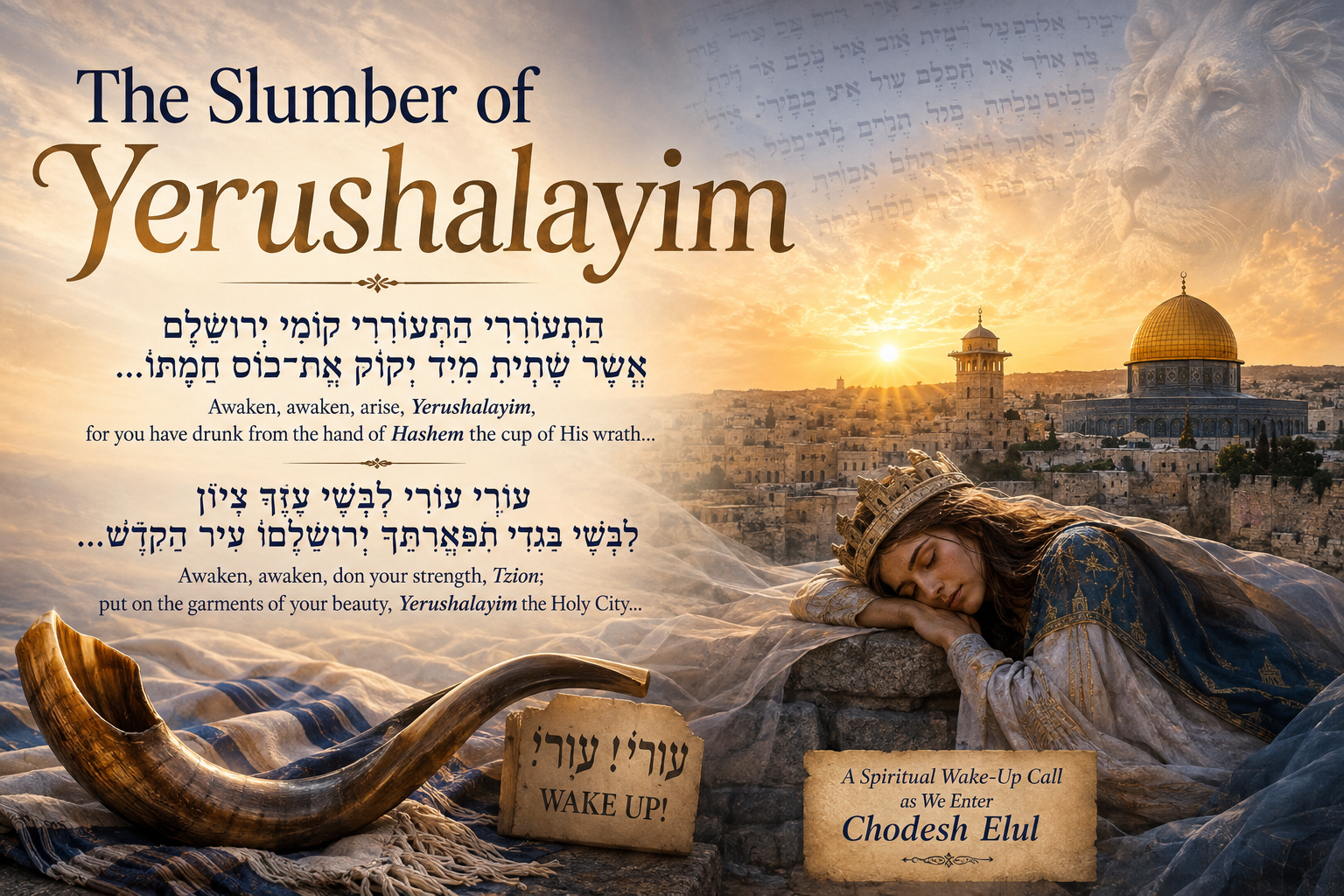
הִתְעוֹרְרִ֣י הִֽתְעוֹרְרִ֗י ק֚וּמִי יְר֣וּשָׁלִַ֔ם אֲשֶׁ֥ר שָׁתִ֛ית מִיַּ֥ד יְקֹוָ֖ק אֶת־כּ֣וֹס חֲמָת֑וֹ…
Awaken, awaken, arise, Yerushalayim, for you have drunk from the hand of Hashem the cup of His wrath…
עוּרִ֥י עוּרִ֛י לִבְשִׁ֥י עֻזֵּ֖ךְ צִיּ֑וֹן לִבְשִׁ֣י בִּגְדֵ֣י תִפְאַרְתֵּ֗ךְ יְרוּשָׁלִַ֙ם֙ עִ֣יר הַקֹּ֔דֶשׁ…
Awaken, awaken, don your strength, Tzion; put on the garments of your beauty, Yerushalayim the Holy City…
These beautiful verses feature prominently in our weekly recitation of Lecha Dodi. Many do not realize that when we call out “עורי! עורי!” we are actually echoing the biblical words of Yeshayahu, calling upon Yerushalayim herself to awaken. Before we enter into Shabbos, we implore Yerushalayim to awaken, to shake off the tears of exile, and rise once again as the mighty city that serves as Hashem’s beloved bride.
While these verses certainly refer to Yerushalayim, I could not help but think how much more meaning they carry when recited and leined immediately after Rosh Chodesh Elul. The Rambam famously writes (Teshuva 3:4) that the blowing of the shofar is akin to a wake-up call. Over the year, a Jew begins to “slumber,” losing his grasp of his ultimate purpose and forgetting his Creator. The pettiness of this mortal world and the vicissitudes of daily life dull our awareness of truth and weaken our passion for the service of Hashem.
The shofar powerfully sounds the alarm. The same instrument that heralds Divine coronation awakens us from our spiritual slumber, reminding us who we are and what we ought to be.
While the formal mitzvah of shofar only applies to Rosh HaShanah itself, Chazal instituted that we blow shofar starting from Rosh Chodesh Elul itself (Tur, Orach Chayim 581). Our spiritual wakeup call therefore begins a full thirty days before the day of Hashem’s coronation.
Seen through the lens of the Rambam’s understanding of the slumbering Jew and teshuva, Yeshayahu’s symbolism of a sleeping Yerushalayim takes on a whole new depth. In the darkness of exile, Yerushalayim and Klal Yisrael do not only experience suffering. They experience confusion and a loss of purpose. They are “drunk, but not from wine,” pitifully oblivious to their intended destiny.
The tragedy of exile, therefore, is not merely our physical wandering, persecution, and pain. It is a profound state of spiritual disorientation. The Jewish people stumble through the darkness, blindly grasping for the glorious destiny that once illuminated their path.
If our slumber is not only physical, then our reawakening cannot be merely physical either. Yerushalayim’s restoration is more than just the rebuilding of stones and concrete; it is the reclamation of her spiritual destiny, the donning of “the garments of her beauty” once again.
This is why the words of Yeshayahu are so particularly appropriate as we enter Chodesh Elul. The shofar calls upon the Jewish people to awaken in repentance: עורי! Wake up! So too, Yeshayahu calls upon Yerushalayim to awaken, to shake off the slumber of exile and reclaim her glorious destiny.
toto togel
toto togel
situs gacor
situs togel
toto togel
toto togel
toto togel
link gacor
toto togel
link gacor
togel online
slot gacor
link gacor
situs gacor
toto togel
kampungbet
toto togel
link gacor
toto togel
situs togel
situs togel
toto togel
link gacor
slot gacor
slot gacor
situs togel
togel online
kampungbet
situs gacor
toto togel
slot gacor
link gacor
situs hk
situs hk
situs toto
slot gacor
link gacor
situs toto
situs togel
toto
link gacor
slot gacor
link gacor
situs gacor
toto togel
situs toto
toto togel
toto togel
toto togel
toto togel
toto togel
kampungbet
kampungbet
kampungbet
situs gacor
situs gacor
toto togel
kampungbet
kampungbet
situs gacor
kampungbet
kampungbet
kampungbet
kampungbet
kampungbet
kampungbet
kampungbet
kampungbet
kampungbet
kampungbet
kampungbet
kampungbet
kampungbet
kampungbet