A Street Named for Heresy and a Lesson in Eternity

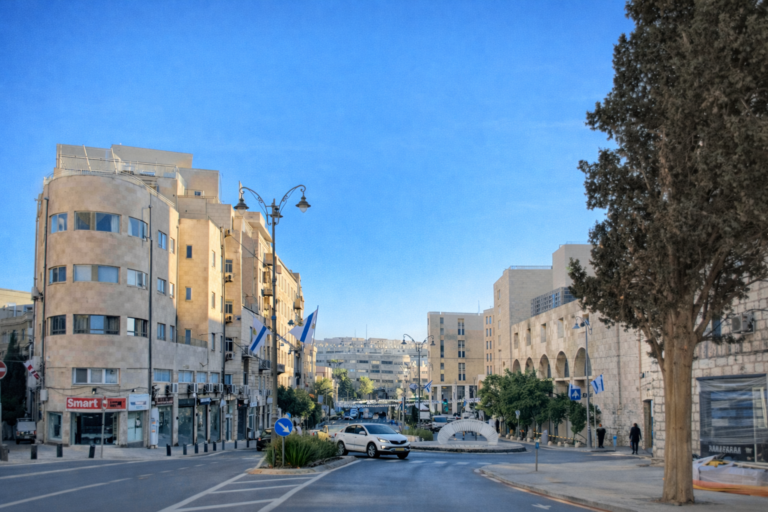
One of the most charming features of Medinat Yisrael is its street names. Simply walking the streets of Yerushalayim – or any other city in the country – one encounters roads named after heroes of Tanach and champions of our Mesorah. The names of Tanaitic sages, Amoraic scholars, and modern-day gedolim appear constantly on street […]

Explore more

Under Watchful Eyes: The Weight of Walking in Holy Space

Moshe Rabbeinu, the greatest prophet and leader of the Jewish people, was chosen by Hashem as he humbly shepherded his father-in-law’s sheep in the desert of Sinai. Chazal famously explain that it is specifically Moshe’s selfless behavior when caring for his flock that proved his worthiness to be the shepherd of Klal Yisrael (Shemot Rabbah […]

Explore more

Yissachar’s Vision: the Donkey Who Longs for Yerushalayim

As Yaakov Avinu blesses his sons, he identifies the unique spiritual traits that characterize their divine missions in this world. He compares his son Yissachar to a powerful donkey carrying a heavy load. Famously, Chazal interpret this as a metaphor to the yolk of Torah study; Yissachar’s descendants would achieve prominence and proficiency in the […]

Explore more

The “Necks” of Israel and the Heavenly Gate

In their emotional reunion, Yosef and Binyamin embrace and begin to cry. The Torah puts deliberate emphasis on Yosef falling on Binyamin’s neck, and Binyamin likewise weeping on Yosef’s neck (Bereishis 45:14). Chazal (see Rashi ibid) explain that tucked deep into the emotional intensity of their reunion, Yosef and Binyamin sensed the future destruction of […]

Explore more

Thirteen Bows: The Greek Breach and the Battle for Hod

Throughout the holiday of Chanukah, we constantly sing of the “breaches” the Syrian Greeks inflicted upon our walls. The songs are stirring, but the reference is puzzling. What “breaches” are we describing and why do we single out this act above the many atrocities inflicted by the Greeks? The Mishna in Middot (2:3) may provide […]

Explore more

Yichud and Pirud: The Spiritual Geography of Yaakov’s Ladder

In Yaakov Avinu’s famous dream, he sees a supernal ladder that binds earth and heaven. At first glance, the ladder’s location would seem to be Yerushalayim. After all, when Yaakov awakens he exclaims that this is the “house of God and gateway of heaven!”  Yet the ladder’s true location is far from straightforward. While its […]

Explore more

Yerushalayim: Where Compassion Refuses to Die

Sodom is typically viewed as the most morally corrupt and spiritually bankrupt society to have ever existed. Deemed irredeemable by God – even after the excessively generous terms negotiated between Avraham Avinu and Hashem – it was doomed to utter destruction. The entire region was overturned by HaKadosh Baruch Hu, left a barren wasteland to […]

Explore more

Brothers Divided, in Yerushalayim United

Long before Dovid HaMelech established his permanent capital in Yerushalayim, the nations of the world already recognized the holy city as a place unlike any other. They sensed its metaphysical significance, the gateway to the heavenly realms (Ramban, Bereishit 14:18). They called the city Shalem, evoking wholesomeness and peace.  Not coincidentally, Yerushalayim straddles the border […]

Explore more

Lifnei Hashem In Purity and Joy

The Torah often employs the phrase לפני ה’ – before Hashem. Yet its precise meaning is not fixed. At times it denotes the heichal, the inner sanctum of the Beit HaMikdash. In other contexts, it refers to the courtyard of the Mikdash. Elsewhere, the Torah is referring to Yerushalayim as a whole.  The mitzvah of […]

Explore more

Bikkurim: Where the Fields Meet the Mikdash

The mitzvah of Bikkurim seems to defy the categories we normally associate with agricultural mitzvot. At first glance, Bikkurim appears to be just another mitzvah to separate produce for the Kohanim. Like Terumah, it involves separating fruit from a crop that can only be consumed by the Kohen. Indeed, the Rambam (Bikkurim 3:1) already notes […]

Explore more